Keep a public place open
The budget-neutral labor helped keep Caper Acres and Lower Bidwell Park functioning during a severe municipal staffing and financial crisis.
Caper Acres · public space · alternative custody · restoration
Caper Acres combines parks, budgets, public safety, supervised service and a community asset that children actually use. The story is stronger when those systems remain visible together.
2013 · Alternative Custody Supervision
During Chico’s financial crisis, Randall proposed using willing Alternative Custody Supervision participants for supervised municipal work.
The proposal reduced pressure on the jail by creating a supervised community-service alternative while also addressing insufficient municipal staffing, the threatened closure of Caper Acres, and the need for participants to complete sentences in a productive and restorative way.
The participants were the “triple-nons”: nonviolent, nonserious, and nonsexual low-level offenders. They served outside jail under electronic monitoring and Butte County Sheriff’s supervision. Participation allowed them to work off time through community service.
The arrangement was budget-neutral for Chico. It supplied supervised labor for Caper Acres and Lower Bidwell Park at no cost to the City.
In principle, the model resembled fire-inmate service: custody time converted into useful public work. The difference was risk. These participants were assigned to far lower-risk municipal maintenance, not wildfire response.
October 2013 television coverage connecting the threatened Caper Acres closure with supervised Alternative Custody participants—people serving sentences for nonviolent, nonserious and nonsexual offenses—working in Caper Acres and Lower Bidwell Park. The same clip also covers the separate Bidwell Park alcohol-policy debate.
Why the place mattered
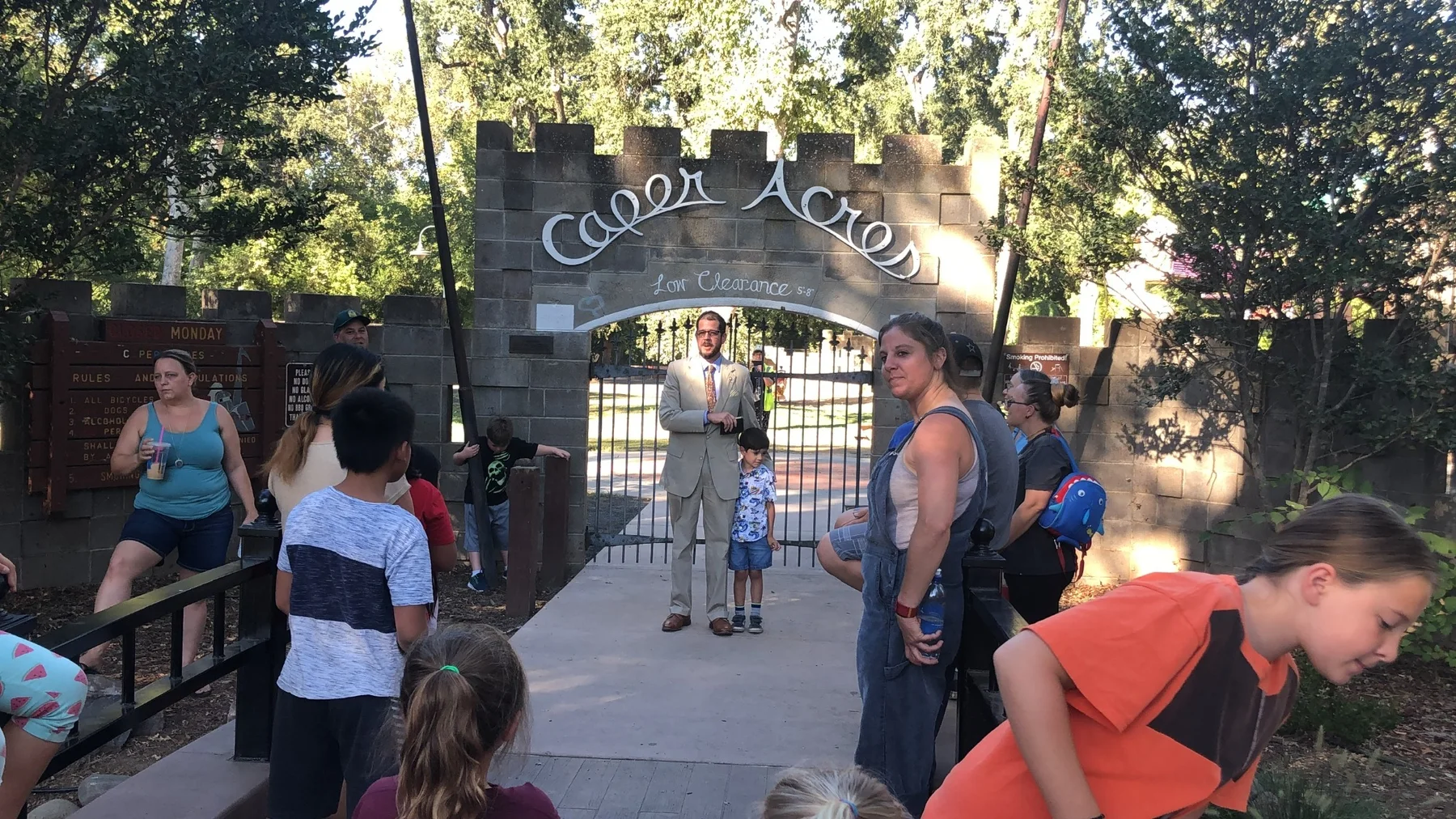
The ACS work program was not an abstract exercise in budget mechanics. Caper Acres was a place families actually used, remembered, and returned to.
Stone family at Caper Acres beside the Humpty Dumpty figure.

Contemporary record
The budget-neutral labor helped keep Caper Acres and Lower Bidwell Park functioning during a severe municipal staffing and financial crisis.
Willing triple-non participants served under electronic monitoring and Sheriff’s supervision while working off time through useful municipal service.
The program joined accountability with restitution: participants completed sentences while returning tangible value to the community.