Infrastructure
Surface quality, curb ramps, crossings, visibility, lane geometry, debris, drainage and route continuity are daily operating conditions, not abstractions.

EUC · bicycle · foot · transit · streets
Nearly a decade of electric-unicycle transportation changed the scale at which streets, crossings, weather, traffic behavior and family movement were experienced. It belongs in the record as transportation and street-level observation, not stunt imagery.
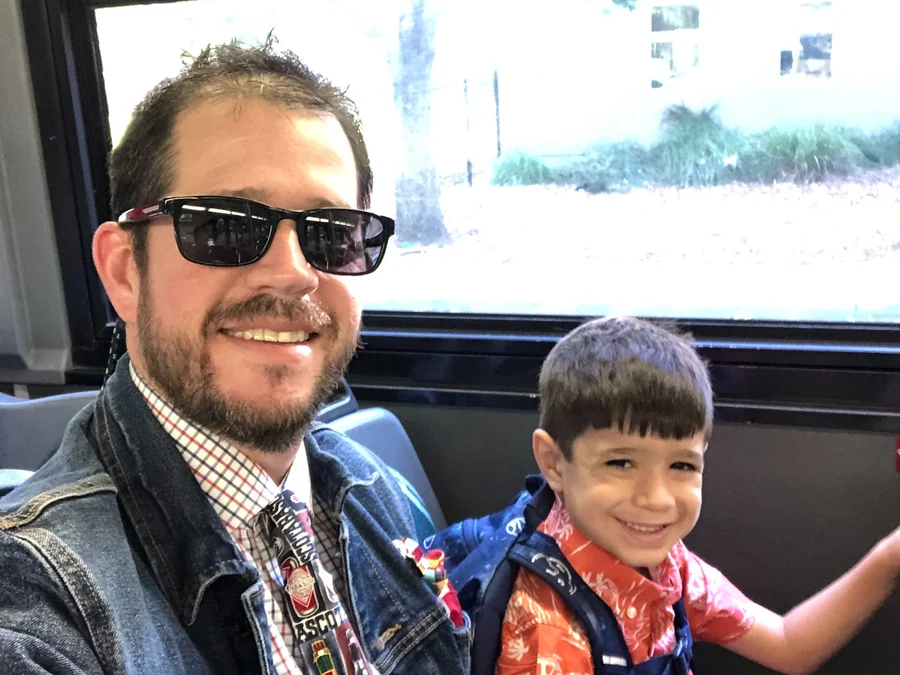
Chico News & Review’s 2019 “Whom to Watch” profile noted the electric-unicycle commute as part of the practical problem of fitting public office, professional work, teaching, boards, family and running into the same finite day. The EUC was never hidden from public life. It was part of how that life moved.
Read CN&R’s 2019 profile →Equipment & visibility
The InMotion electric unicycles I use carry a black-and-orange color scheme. That happens to align with the orange visibility system that also shows up in my kayak, dry suit, paddling gear, field equipment, K6RCS and Team Stone.
The color identity therefore follows the equipment and the practical need to be visible. It was not invented later as a branding exercise.
Street-level planning
Surface quality, curb ramps, crossings, visibility, lane geometry, debris, drainage and route continuity are daily operating conditions, not abstractions.
Riding alongside children on bikes turns traffic rules, route choices, hand signals, visibility and geography into repeated family practice.
Weather, battery range, alternate routes, lights, protective gear, communications and meeting points connect ordinary mobility to Team Stone’s broader planning doctrine.
Team Stone →Class IV bikeway · public right-of-way · firsthand account
We recently crossed Chico by bicycle from one end of the city to the other, almost entirely in Class IV separated bikeways. One stretch carries a useful little history about who is expected to own the street—and how petty the defenders of the old system can become when a city begins repairing it.
A behemoth automobile dealership adamantly opposed the separated bikeway near its property. According to my firsthand recollection, the dealership’s position changed only after it learned that the city already controlled the public right-of-way directly in front of the showroom. The “fucking purple poles” were not going nearby; they could be installed out front.
The dealership capitulated on one condition—“No fucking purple poles.”
So that stretch has pure white poles.
The color was only the petty little tell. What the dealership opposed was a separated bikeway in a landscape dominated by gigantic parking lots, widened roads, dangerous crossings and the assumption that nearly everyone would arrive by car.
The bikeway did not break that system. The system was already broken all around it. The bikeway simply acknowledged the damage and reclaimed enough public space to let people cross the city without becoming traffic.
They could not stop the bikeway, so they demanded that the repair arrive without purple. Perhaps the dealership needs a little counseling before it hits the streets again. Nothing says you are finally prepared to share the road quite like screaming “No fucking purple poles” at the infrastructure trying to repair the damage around you.
Source status — This account is Randall Stone’s firsthand recollection. The exact project correspondence, meeting record and dealership statement remain source-recovery items; the quote is not presented as an independently verified transcript.
Transit · bicycles · EUC
Serving on BCAG while also using buses, bicycles and an electric unicycle made the gaps between policy diagrams and ordinary travel unusually hard to ignore. Family logistics made those gaps even less theoretical.
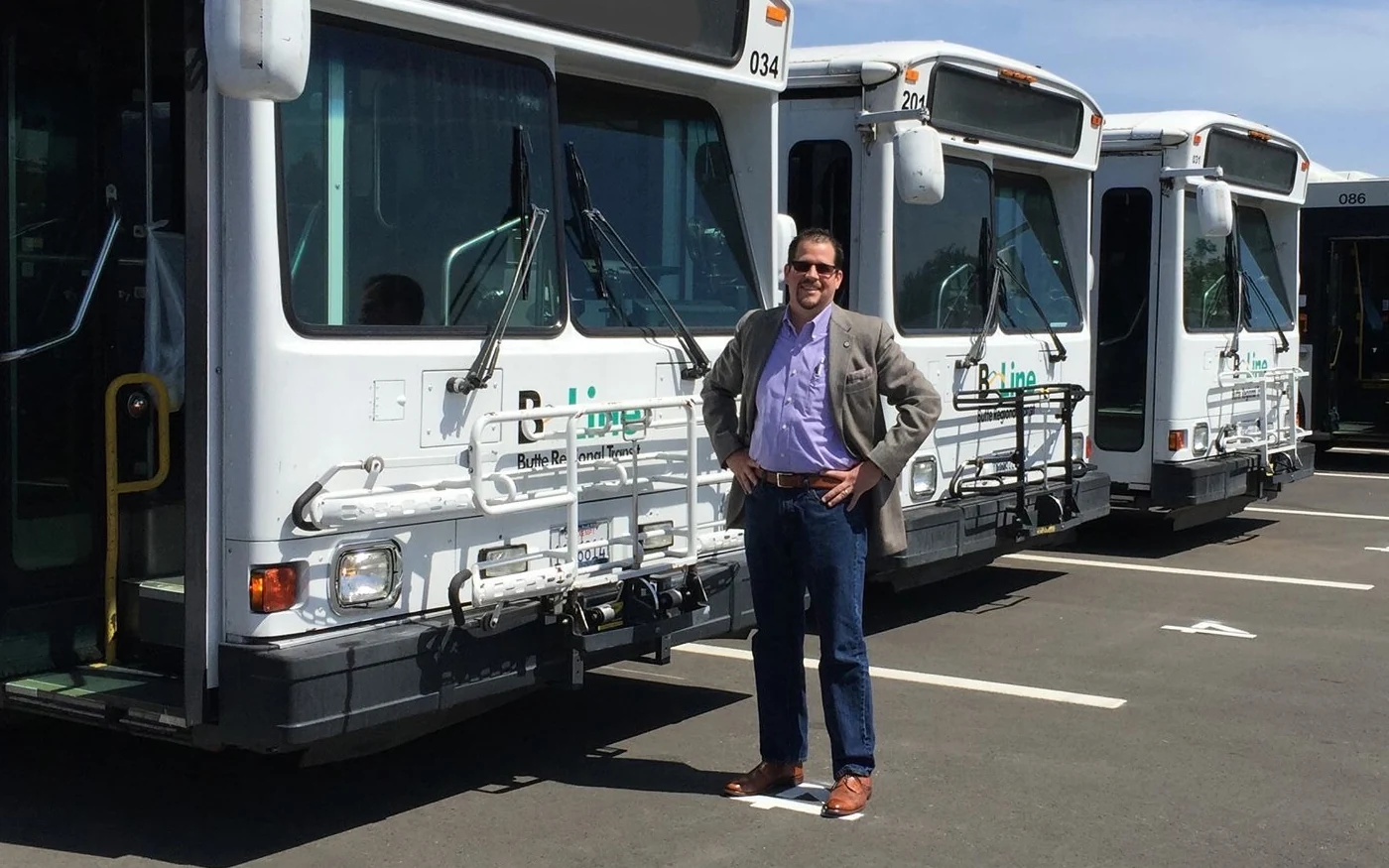
Regional transit policy involves capital equipment, maintenance, accessibility, service planning and the people who actually need the route to work.
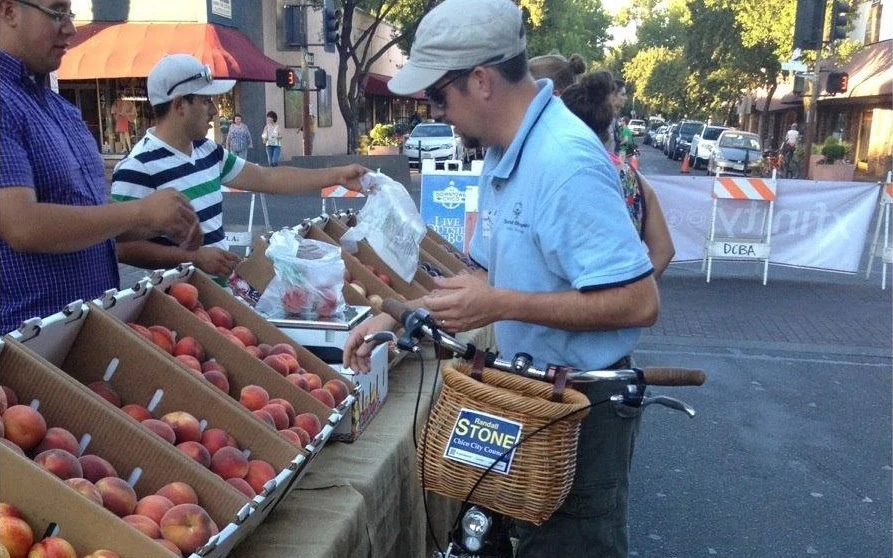
Bicycles were ordinary transportation into downtown civic and family life, not a separate recreation category.
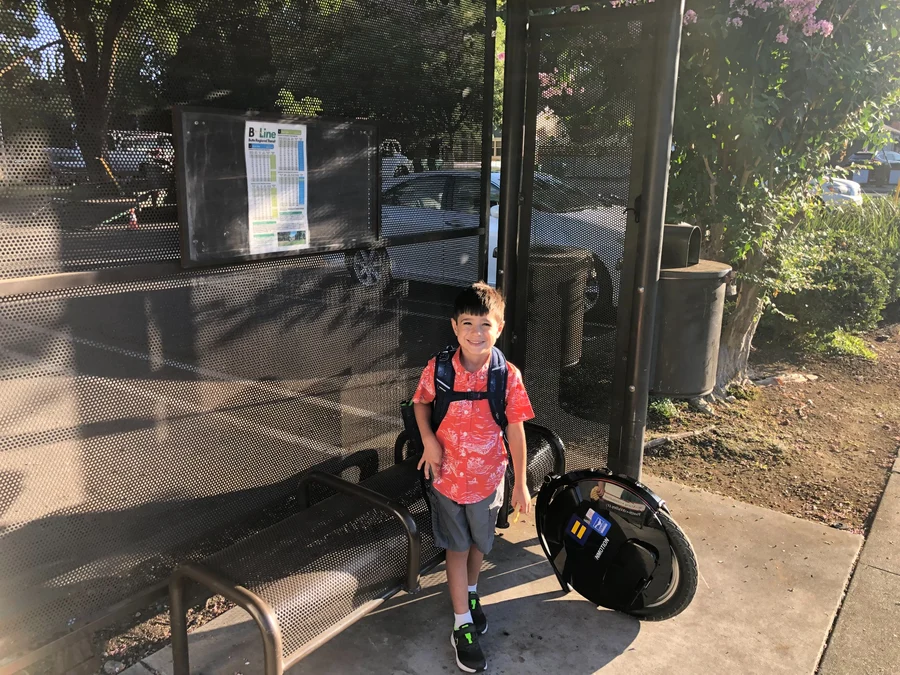
Randall rode the electric unicycle to Rhys’s daycare. They used fare-free B-Line transit in town and walked the last mile.
A crash does not erase the mode
The public sentencing record documents a DUI collision while Randall was riding an electric unicycle through a crosswalk with his young son following on a bicycle. The crash, recovery and later victim-impact statement belong in the personal record because they connect parenting, mobility, safety, trauma and the decision to keep living a full life rather than allowing one driver’s conduct to define the mode of transportation.
There is an older transportation-injury baseline too: an October 1988 bicycle crash on Stanford University’s Campus Drive, at age 14, cost me a front tooth. The original tooth has been absent ever since. That history matters after 2024 precisely because the two events should not be conflated.
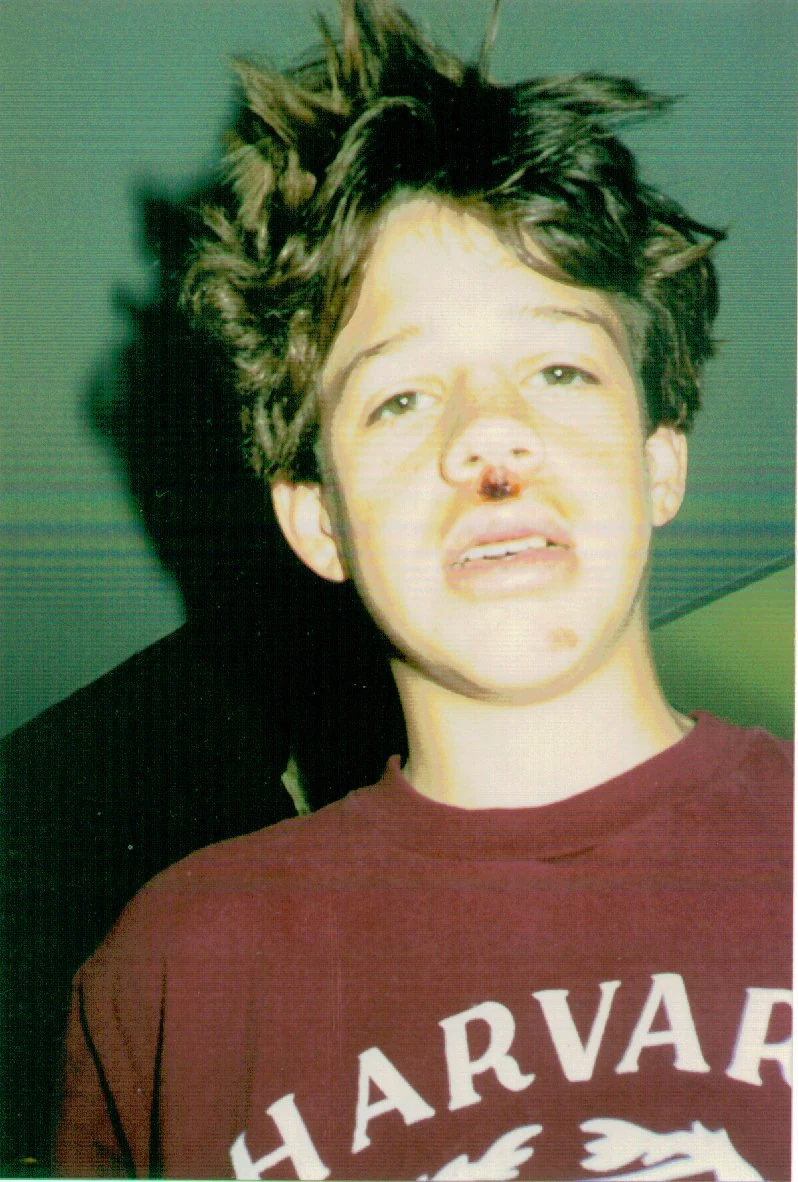
The transportation record starts early
By seventeen, bicycle mileage was already measured in tens of thousands. The October 1988 Stanford crash at age fourteen also left a permanent dental baseline: the front tooth was lost then, not in the April 2024 EUC collision.