Competitive swimming and running
Swimming and running began around age five. Swim history includes Laurelwood Swim Club and De Anza Cupertino Aquatics; some Laurelwood age-group records may still survive, pending verification.
Childhood · bicycles · races · beginnings
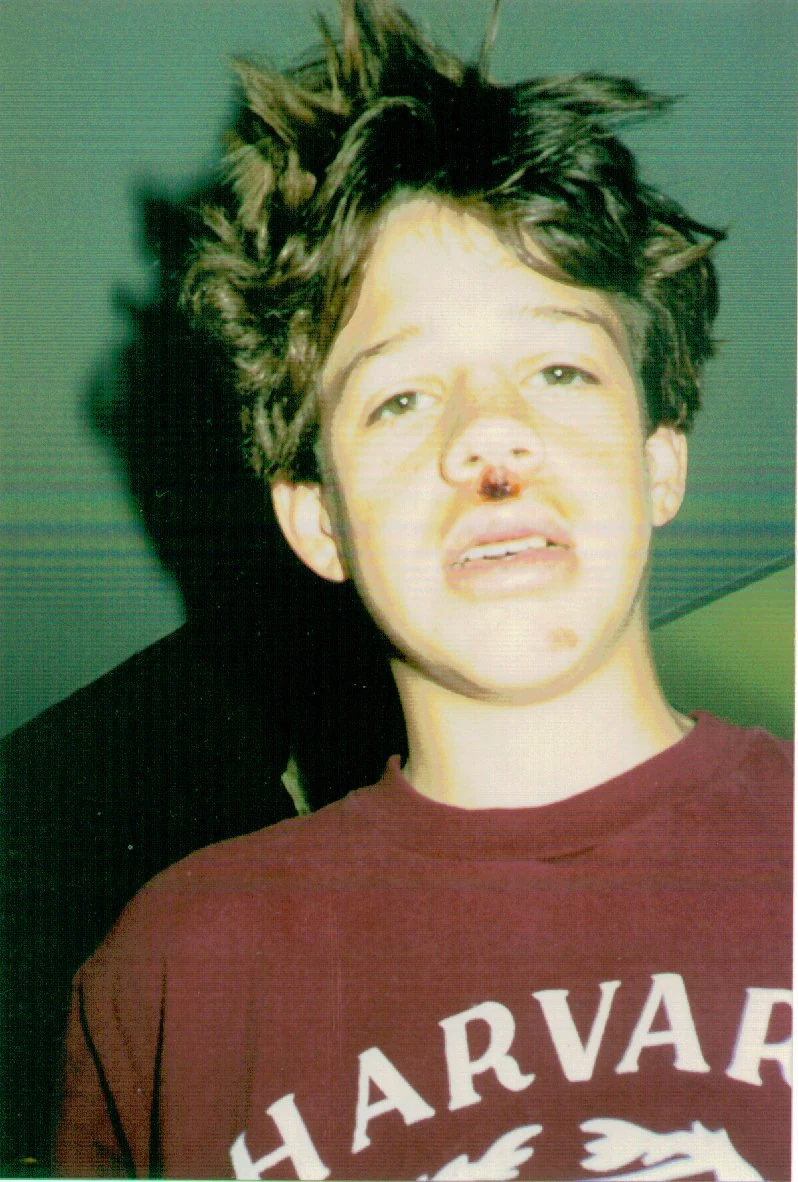
Cold water, bicycles, race travel and competitive sport started early. The record matters later because some injuries and habits, including the missing front tooth from the October 1988 Stanford bicycle crash, long predate more recent events.
Cold water, bicycles and race travel were ordinary parts of childhood.
The early building blocks
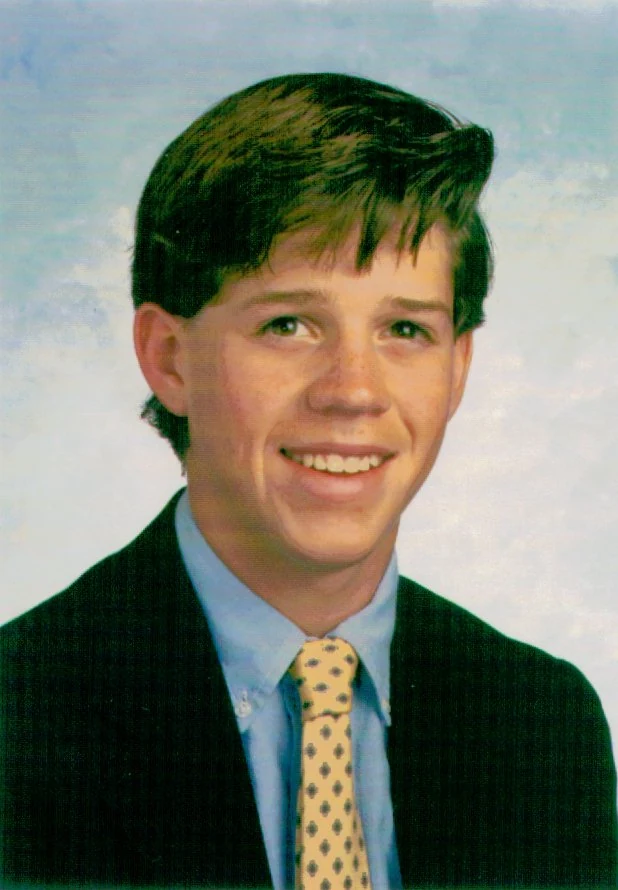
The following school-year portrait is paired with the October 1988 Stanford bicycle-crash photograph. The yellow tie and blue blazer are not evidence of youthful restraint. They are evidence that somebody owned a camera at an unfortunate moment.
Long before the Team USA years, movement was already ordinary. As a child, I once competed in a biathlon, a triathlon, and a 10K over one Saturday-and-Sunday weekend. All three were morning races, and each was held at a different location.
Before I received my first driver’s license on my seventeenth birthday, I had accumulated tens of thousands of bicycle training miles. The earlier family estimate of more than 25,000 miles remains consistent with that history.
Training routes ran through Portola Valley, Los Altos Hills, Menlo Park, La Honda, Half Moon Bay, Pescadero, Santa Cruz and Mount Hamilton. Running centered heavily on Rancho San Antonio, especially Wildcat Loop and the steep power-line route I knew as “Powerpoles.”
Cycling, endurance sport and school were already established parts of daily life before college.
I swam from Alcatraz to San Francisco four times, completing the first crossing at age fourteen. In the old Escape races, that cold-water start could lead to the Golden Gate Bridge bike path, Mill Valley and the Double Dipsea—or to one of the long, loose Marin Headlands courses. The bicycle-through-the-Presidio-in-a-Speedo detail is not metaphor. Read the fuller Escape history →
At fifteen years and two months, I became the youngest person to qualify for the United States Triathlon Championships. My older brother Ted had previously qualified at fifteen years and nine months, so the family record moved by seven months.
I had already been swimming and running competitively for years when triathlon arrived. Competitive swimming began around age five, including Laurelwood Swim Club and later De Anza Cupertino Aquatics. Running began at about the same age. From 1984 through 1993, I then raced full triathlon seasons and accumulated roughly 150 starts. The circuit included Chicago Sun-Times, USTS, ITU and other races across roughly half the United States.
A larger pattern
The driver’s test is almost too literal: the fire department was dealing with a burning test vehicle immediately before my exam, I helped once everyone was safe, and then scored 100 percent behind the wheel.
Triathlon produced the same pattern in less comic circumstances. Some of my strongest races began with blown goggles, a hard kick to the chest in a mass start, or even a helmet stolen from transition. The race did not care that the start had gone wrong. The useful response was to solve what could be solved and keep moving.
“Look, Ran, success is dealing with adversity.”
My father gave me that line. He was also a source of emotional and physical abuse in my childhood and later expelled me from the family home with roughly two weeks’ notice despite no misconduct. I have spoken publicly about that history. Keeping the quote does not excuse the conduct; it explains why the sentence became useful on its own terms.
I do not describe that childhood as harmless simply because I became durable. It left scars and costs that became clearer with age. At the same time, surviving that level of instability may have helped shape the athlete and adult who learned to function under pressure, endure discomfort, and keep going when circumstances deteriorated.
Swimming and running began around age five. Swim history includes Laurelwood Swim Club and De Anza Cupertino Aquatics; some Laurelwood age-group records may still survive, pending verification.
With no 9–14 division, I entered the 15–19 division, finished first, and was denied the result for “cheating” because I was too young to be in the race.
I returned to Rapp’s and was physically removed from the race because I was still considered too young. The episode became fuel rather than a deterrent.
I remained an amateur but built sponsorship support that covered substantial travel, equipment, entry and other racing costs. Around 1989, a prominent national triathlon journalist reportedly compared that support favorably with the earnings of roughly 90 percent of the sport’s professionals; exact clipping and attribution pending recovery.
The childhood race problem became a training problem. Tens of thousands of handlebar miles followed before age sixteen.
The first of four swims from Alcatraz to San Francisco.
Youngest person to qualify, seven months younger than older brother Ted’s prior family mark.
Biathlon, triathlon, and 10K, all morning starts and all at different venues.
The bicycle was transportation, training, independence, and the first durable operating system.
October 1988 · age 14
In October 1988, I crashed a bicycle on Stanford University’s Campus Drive and lost a front tooth. The original tooth has been absent ever since. It was an old injury long before the April 2024 collision, but that history became relevant again decades later as a dental baseline: the 2024 crash did not cause the original tooth loss.
The point here is not to turn a teenage crash into mythology. It is simply part of the physical history behind a lifetime spent on bicycles and, later, other small-wheel transportation.
Roughly 150 races, including Chicago Sun-Times, USTS, ITU and other circuit events across roughly half of the United States.
USTS national championship, All-American recognition, invitations to train at Colorado Springs and Lake Placid before triathlon had Olympic status, and 1993 World Championship team gold in Manchester.
Return to Athletics and Movement →
Continue the chronology: Manchester, independence and Foothill →