Family sport
Soccer dad, swim dad, competitive meets, practices, bikes, running, and the logistics that make youth sport possible.
Current movement · family sport · endurance archive
Endurance sport is a long chapter, not a museum label. Open-water swimming, running, cycling and triathlon built habits that still show up in ordinary training, family activity and the willingness to move through difficult conditions.
The current chapter
Most weeks, athletics looks less like a podium and more like practices, meets, games, carpools, gear, weather, meals, timing, and showing up. I am still a runner. I swim in pools and open water. I bike. I backcountry ski, cross-country ski, snowshoe, snow camp, and camp in ordinary conditions and decidedly non-ordinary ones. I kayak flat water and whitewater.
Movement is not an old credential. It is part of family life, travel, judgment, and the way I keep myself useful.
Soccer dad, swim dad, competitive meets, practices, bikes, running, and the logistics that make youth sport possible.
Running, cycling, pool swimming, open-water swimming, hiking, and active transportation.
Backcountry skiing, cross-country skiing, snowshoeing, snow camping, tent camping, flat-water kayaking, and whitewater kayaking.
A long relationship with movement
I began competitive swimming at about age five, including Laurelwood Swim Club and later De Anza Cupertino Aquatics (DACA). I may still have surviving Laurelwood age-group club records; that part remains pending archive verification.
A contemporary 1981 report identifies me as an eight-year-old Sunnyvale runner and says I had been running for about six months. I also spent a short period with the Cupertino Yearlings around age seven or eight. Later came more 5Ks, 10Ks and half-marathons than I can sensibly count, long before and long after the triathlon years.
Before I received my first driver’s license on my seventeenth birthday, I had already accumulated tens of thousands of bicycle training miles. The earlier family estimate of more than 25,000 miles remains consistent with that record.
1983–1984 · age nine and ten
My first Rapp’s Triathlon was in 1983, when I was nine. There was no division for a nine-year-old. I completed the race and my performance would have won the older youth division, but the award was withheld because organizers treated the underage entry as “cheating.” The result sheet is still being sought, so the placement remains labeled as firsthand history.
I came back in 1984. I started with my real information on the entry. Officials recognized me during the race, physically removed me at the bike-to-swim transition, and put my bicycle and gear outside. A surviving 1984 race notice independently confirms the unusual run-bike-swim format and advertises “No Raceday Registration”; the exact mechanics of how the entry was accepted remain part of the firsthand account rather than something the archive pretends to know.
Those two experiences did not discourage me. They did almost the opposite. By that Christmas I had a new bike, and the competitive problem had become permanent.
The two Rapp’s incidents are firsthand athletic history. The 1984 event date, published “No Raceday Registration” notice, and run-bike-swim format are independently documented; the 1983 result and 1984 removal paperwork remain open archival targets. Because organizers allegedly treated the 1983 entry itself as illegitimate, failure to find a normal finisher row is treated as neutral rather than contradictory evidence.
Before Team USA
These are firsthand biographical facts from my own athletic record. They belong before the later medals because they explain how unusual the competitive path already was.
Career scale
Competition beginning in 1983 and continuing through 1993, including national, international and regional circuit racing.
Geography
Race travel included Chicago Sun-Times, USTS, ITU and other circuit events across roughly half of the states.
Open water
Alcatraz to San Francisco four times, first at age fourteen; the old Escape courses paired the crossing with the Double Dipsea or long Marin Headlands runs.
The Alcatraz crossings required cold-water judgment, pacing, navigation, and the ability to keep working when the destination looked farther away than it was. The championship qualification and national travel came from the same early pattern: training, transportation, logistics, family support, and a willingness to start unusually young.
Those experiences eventually led to Team USA, a national championship, All-American recognition, and team gold in Manchester. They also led to the present chapter: running, open-water swimming, family sport, backcountry travel, and practical endurance rather than nostalgia.
Read the expanded Building Blocks story →Continue to 1993–96: Team USA, independence and Foothill →
The point is not to turn childhood races into a trophy wall. Contemporary swim programs, road-race sheets, St. Francis results, Vineman, World Triathlon and Donner records now sit beside photographs, retained plaques and certificates, and clearly labeled firsthand memories. The ledger distinguishes recovered external records from physical artifacts that have not yet been scanned.
The archive also preserves the awkward parts: Rapp’s, the two-name Randy/Randall ranking problem, the likely 1990 Chicago flat-tire DNF, airline logistics, a three-races-in-one-weekend reconstruction, and races where the result is still missing.
The archive also preserves the awkward parts: Rapp’s, the two-name Randy/Randall ranking problem, the Chicago flat-tire DNF, airline logistics, and races where the result is still missing.

Awards that survived the decades
Several results that are difficult to find online are tied to original awards still in my possession: a first-place plaque from the August 20, 1989 Chicago Sun-Times Triathlon (15–17), a 1992 Carlsbad Triathlon first-place award (18–19), a 1992 USTS Las Vegas division-winning plaque remembered as the national championship, and my original 1993 Tri-Fed Triathlon All-American certificate.
Until those objects are photographed or scanned, the archive labels them as retained physical artifacts rather than pretending that I have already digitized them. Once scanned, the objects themselves become primary sources.
Escape from Alcatraz · the old course
Some years put the Double Dipsea inside the triathlon: swim from Alcatraz to Aquatic Park, get warm enough to operate a bicycle, cross the Golden Gate Bridge to Mill Valley, then run the Dipsea to Stinson Beach and back. The short run after the swim was added because cold athletes were falling off their bikes. Sensible, by the standards of the event.
The 1990–92 races moved the second transition to Fort Baker and sent us into the Marin Headlands. Published history puts those runs between roughly fourteen and eighteen miles. I remember at least one stretching beyond eighteen. The route was improvised enough that the professional field sometimes used the lead motorcycle or camera helicopter to confirm it was still on course. That was not a production flaw so much as part of the production.
The bicycle leg crossed the Golden Gate Bridge on the shared bike-and-pedestrian path, not the surface roadway, and the bridge remained open to pedestrians. This was long before the modern safety net. Watch it around the towers. After the Alcatraz swim, the ride through the Presidio meant dripping wet, on a bicycle, in a Speedo. It was quite something.
The grey belt buckle that appears in many of my personal photos came from this chapter. It was a division award designed and produced by the race director, whose name still escapes me—no pun intended. I still wear it. It is a personal treasure, and the site will leave the attribution open until the name is recovered rather than manufacture one.
Pressure and recovery
A recurring feature of the triathlon years was that serious early problems did not necessarily produce bad results. Open-water goggles were blown off. In mass starts I was kicked hard in the chest. At one race my helmet was stolen from the transition area and never returned. Several races that began with that kind of chaos became some of the best performances of my career.
The useful lesson was not that adversity is desirable. It was that panic wastes time. Solve the immediate problem, keep moving, and race the course that still exists.
That same pattern shows up elsewhere in the biography: a driver’s-license test immediately after the car in the preceding test caught fire, abrupt financial independence after Manchester, and much later the long recovery after the 2024 crash.
Amateur status · sponsorship · work
I remained an amateur throughout the triathlon years. There was no professional salary underwriting the circuit. I worked and managed the career myself, while sponsorships covered substantial travel, equipment, entry fees and other racing expenses.
Circa 1989, a prominent national sports journalist covering triathlon told or wrote that I was receiving more economic support as a sponsored amateur than roughly 90 percent of the professionals in the sport. I remember the comparison clearly; the original clipping and exact attribution remain to be recovered, so the site treats it as an attributed firsthand recollection rather than a verified income statistic.
I also worked at Fleet Feet Sports on the Peninsula, which put the day job inside the same running-and-endurance world I was competing in.
Peninsula training ground
Before age sixteen, most of my bicycle mileage was training mileage. The regular geography ran through Portola Valley, Los Altos Hills and Menlo Park, over toward La Honda and Half Moon Bay, south through Pescadero and Santa Cruz, and east to Mount Hamilton.
Running grew up in Rancho San Antonio. Wildcat Loop and the steep power-line route I knew simply as “Powerpoles” were recurring training ground. The current preserve still maps Wildcat Loop and the power-line climb now identified as the Stephen E. Abbors Trail.
By then the bicycle was not recreation layered onto childhood. It was training, transportation, distance, and independence long before a driver’s license arrived on my seventeenth birthday.
Early triathlon · San Diego lineage
I raced full triathlon seasons from 1984 through 1993, roughly 150 races in all. The schedule included Chicago Sun-Times Triathlon, USTS, ITU and other circuit races across roughly half of the states.
I swam from Alcatraz to San Francisco four times, first at age fourteen. Escape was a moving target in those years: the Double Dipsea version and the long Marin Headlands versions belonged to the same wonderfully unreasonable chapter.
Those years also included training with Ron Smith. Smith was a former Navy Underwater Demolition Team instructor and frogman, an early triathlete and age-group national champion, and a longtime Chart House executive who trained other triathletes.
That was the sport before triathlon became a polished global industry: open water, bicycles, improvised logistics, experienced athletes teaching younger ones, and a fairly casual relationship with the idea that any of this was sensible.
The pre-Olympic summit
I represented Team USA in 1992 and 1993. The public record independently verifies the 1992 World Championship start; the working archive also tracks my 1992 USTS national-title history and 1993 All-American recognition. Original awards survive for the 1992 USTS Las Vegas division win and the 1993 Tri-Fed Triathlon All-American designation and are queued for digitization. I also raced on the U.S. World Championship team in Manchester, England, in August 1993; the individual/team-scoring records for that championship remain active archive targets.
I was invited to train at the U.S. Olympic Training Centers in Colorado Springs and Lake Placid. At the time, triathlon was not yet an Olympic sport: Olympic status was not formally approved until 1994, and the sport did not debut in the Games until Sydney 2000. Being invited into those training environments before Olympic inclusion was therefore an unusual honor and an early investment in athletes competing at the sport’s highest international level.
For international-distance triathlon, the World Championships were the summit of the pre-Olympic pathway. Ironman existed alongside it as a different long-course discipline with different pacing, training and peaking rather than simply the next rung on the same ladder.
I wore a yellow hat so family, teammates, and spectators could identify me across a course. Orange now performs the same job on water, snow, roads, radios, EUCs, and Team Stone gear.
Running beyond triathlon
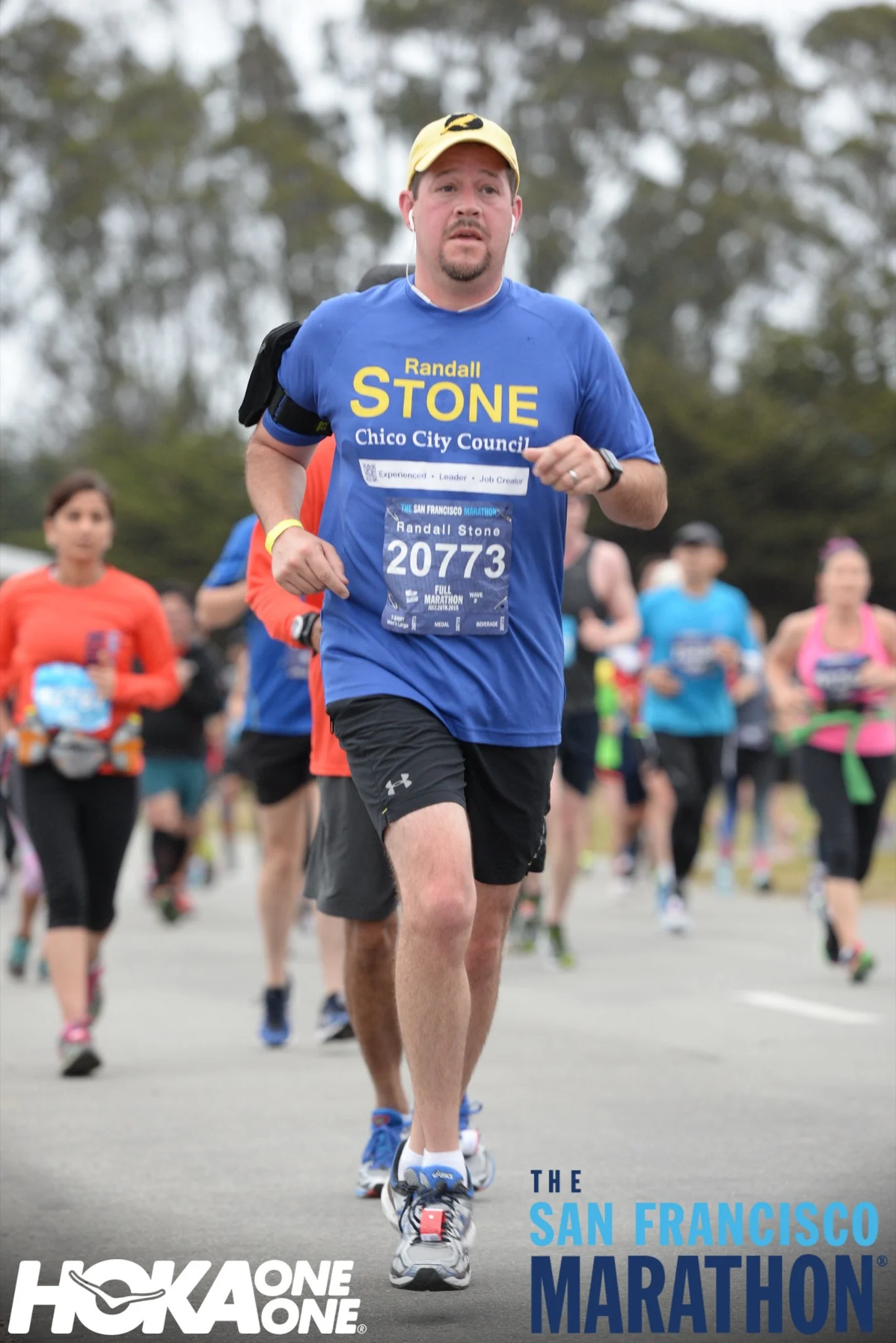
I competed in cross-country and track at Foothill College and was named the cross-country team MVP. Across the years there have also been more 5Ks, 10Ks and half-marathons than I can reliably count. The 2014 San Francisco Marathon belongs between the old Team USA chapter and the present life of running, swimming, parenting, skiing, camping, and family sport.

What endurance became
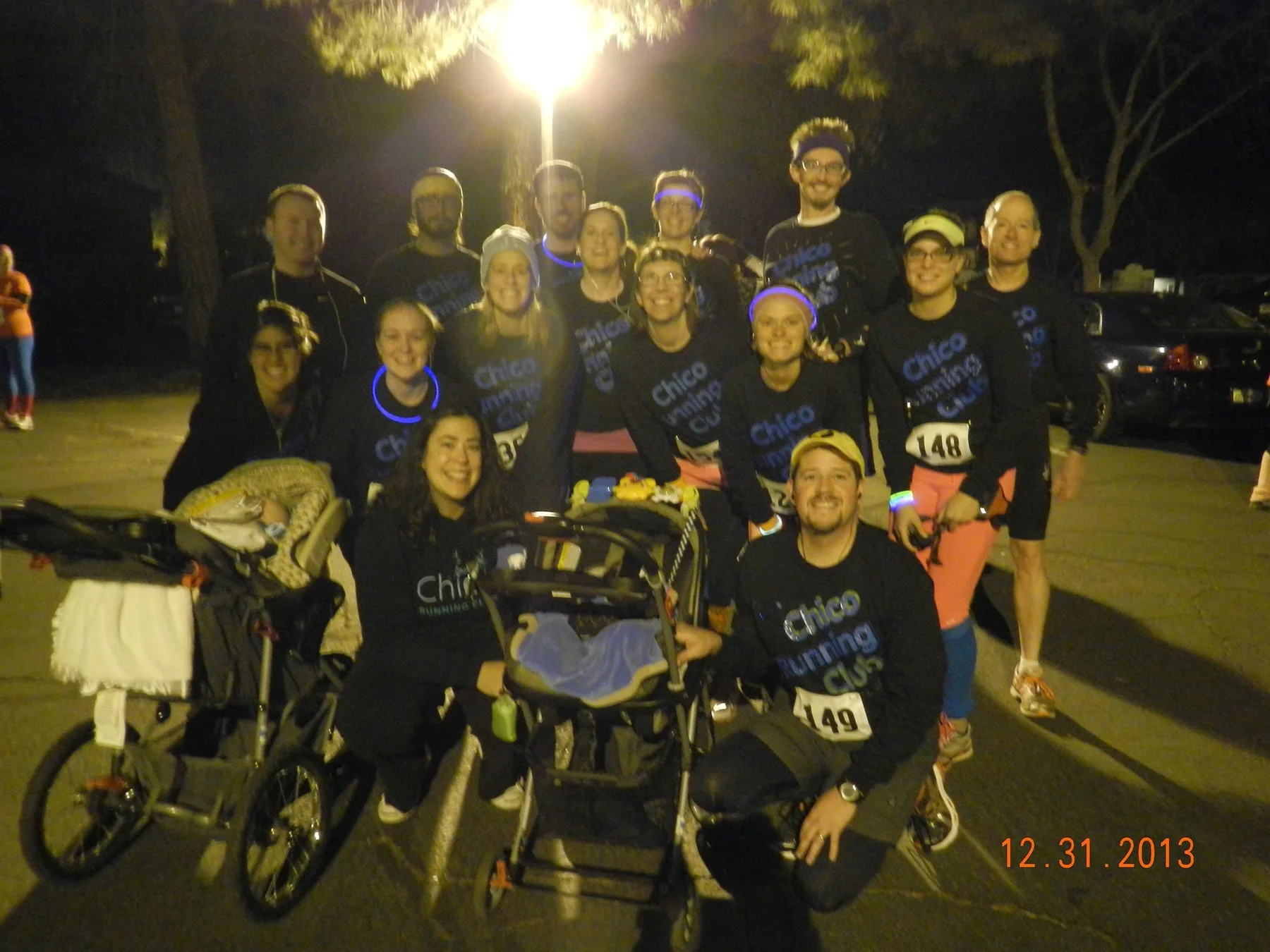
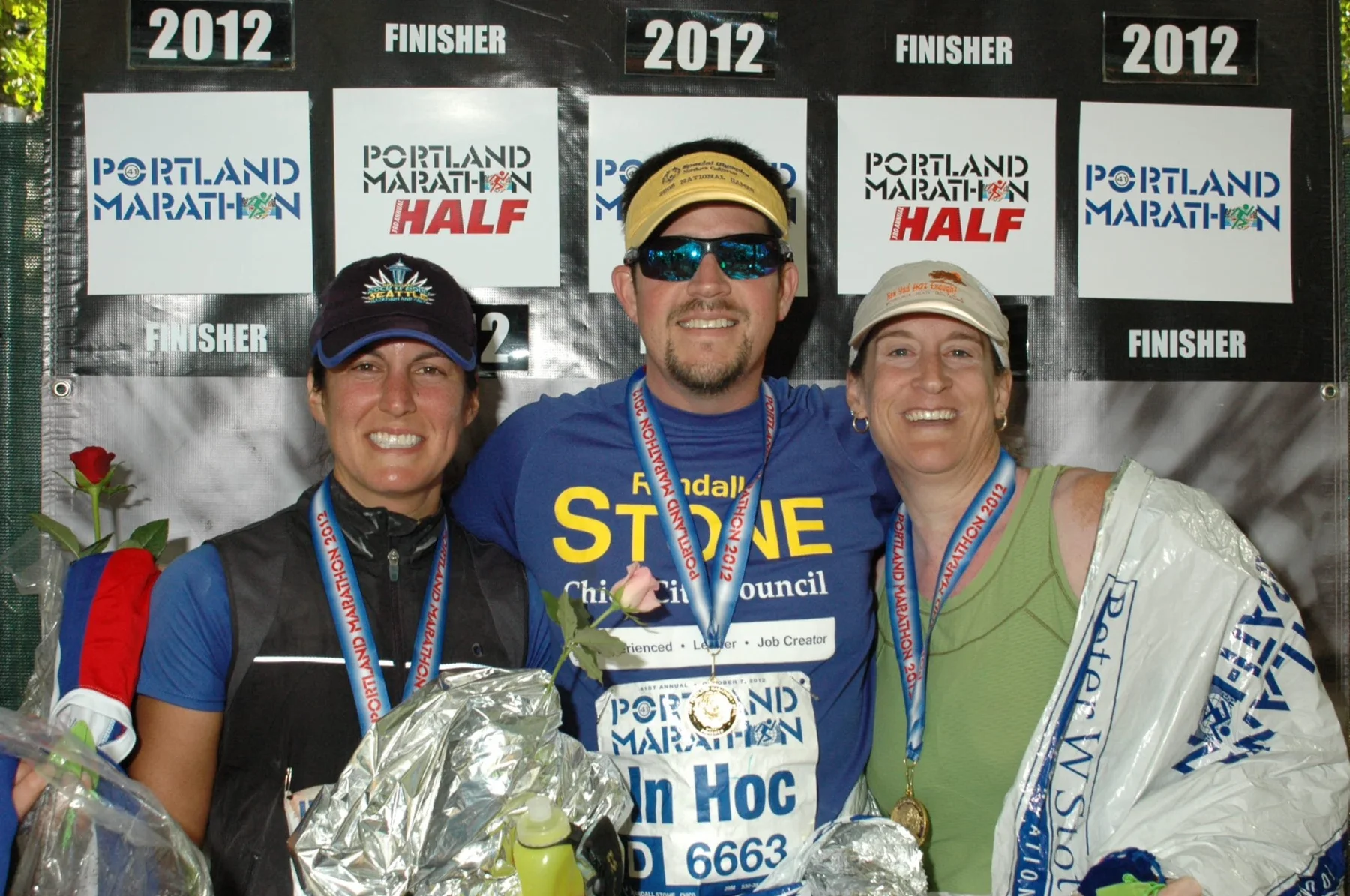
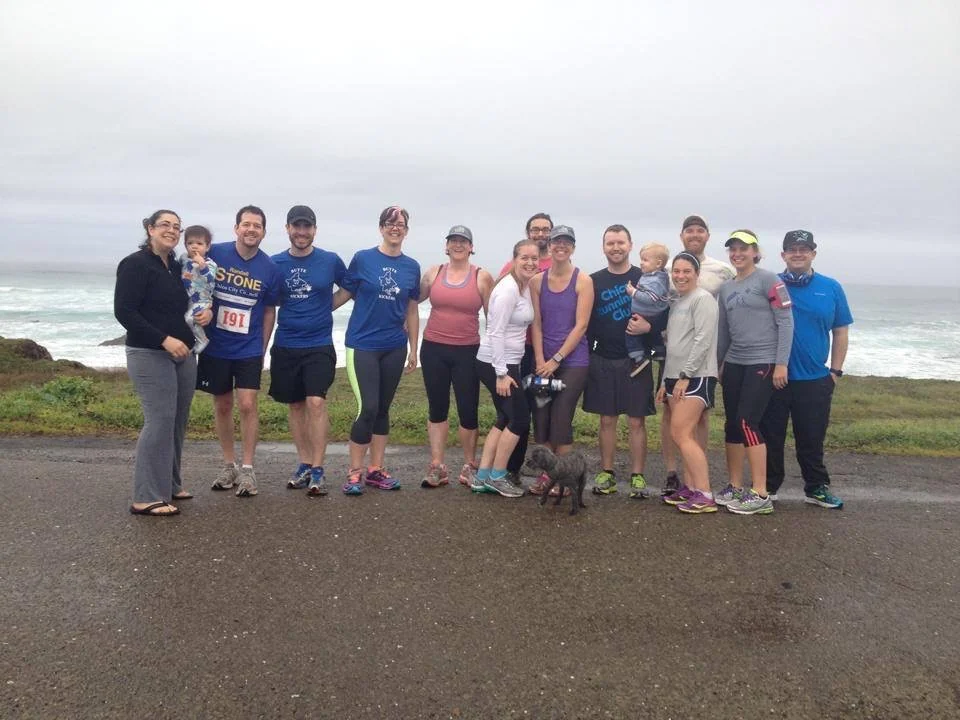
The competitive chapter eventually became Special Olympics service, running-club leadership, coaching, family swimming, youth soccer, active transportation, open-water swimming, and the routine discipline of helping other people get to the start line.


Current endurance
Running and swimming remain part of the athletic base. Backcountry skiing, cross-country skiing, snowshoeing, snow camping, cycling, kayaking, and family movement are where endurance becomes practical rather than ceremonial. Cross-country skiing and snowshoeing have been less frequent lately because the snow itself has been less cooperative.
Equipment note: the kayak Three’s Company, my dry suit, and much of my paddling gear are orange; the InMotion EUCs are black and orange. The personal orange identity grew out of equipment and visibility as much as design.
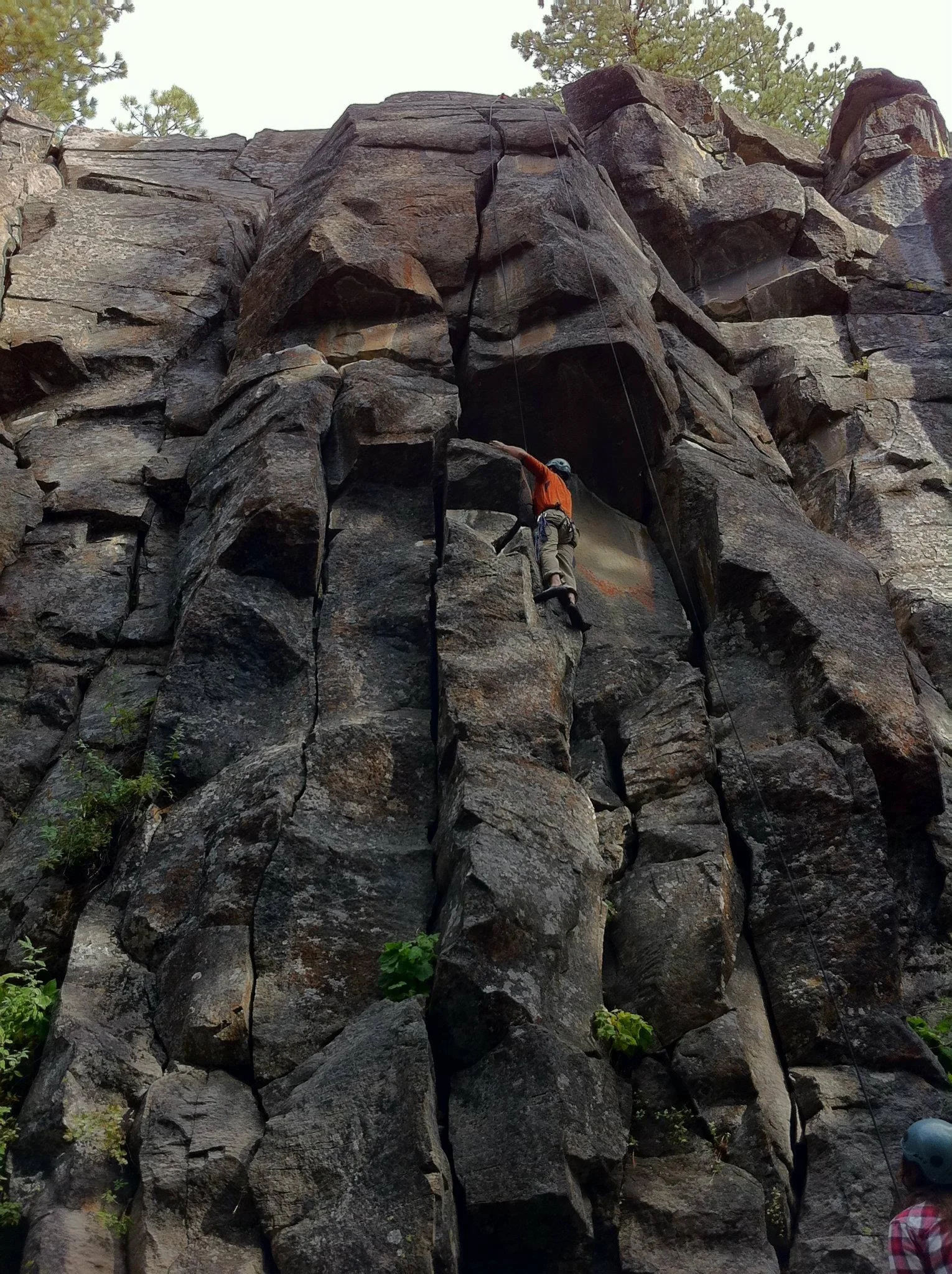
Endurance events need infrastructure
Hydration, shade, setup, cleanup, volunteers, family logistics, and people willing to stand in a dry field are part of the endurance community too.
The exact event and date remain to be attached to the archive.
