The operating center
Family is where every plan gets stress-tested.
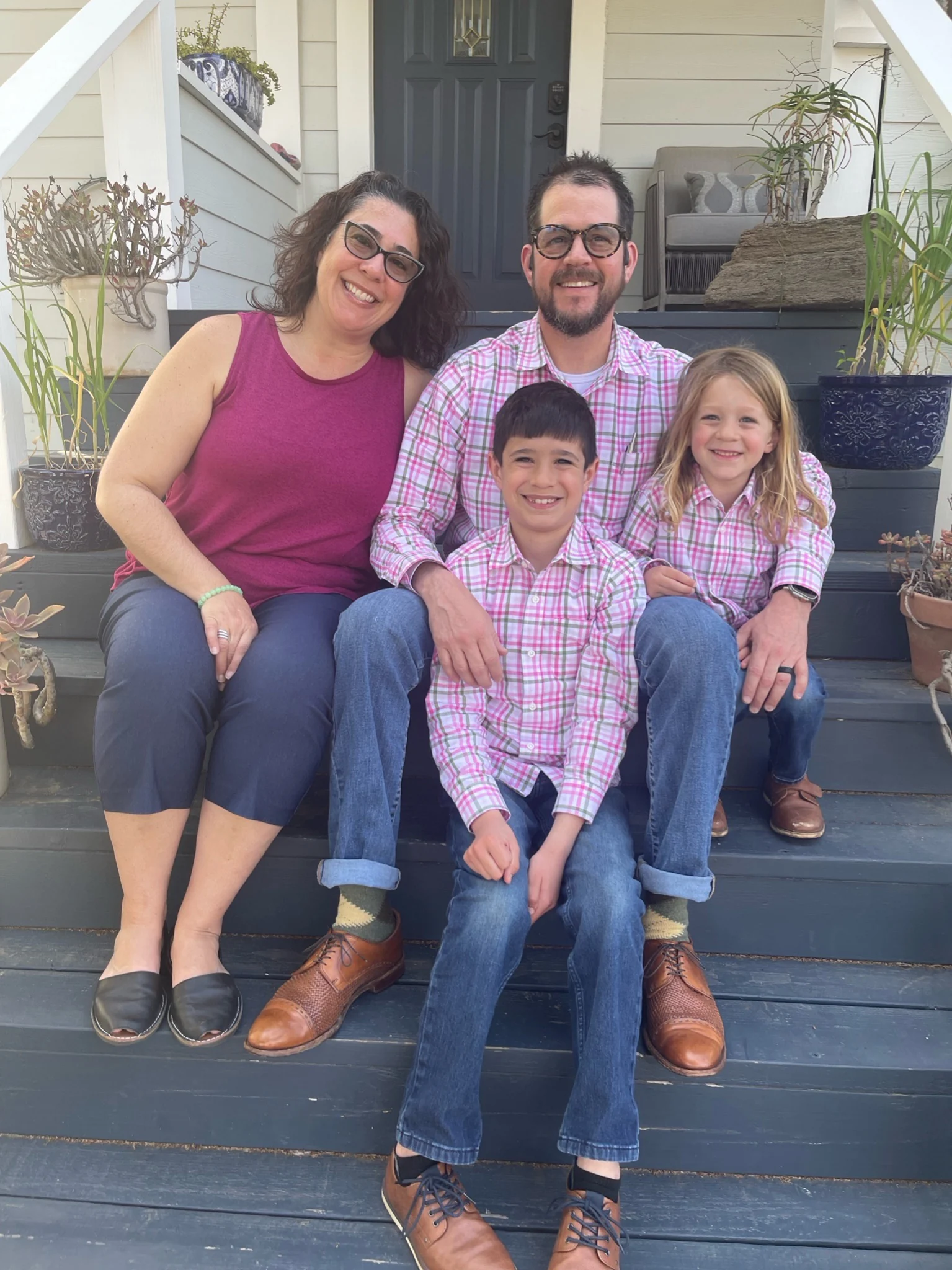
Family life is the place where planning stops being theoretical: school, sports, culture, travel, budgets, weather, transportation and two bilingual boys with their own interests. The public record can be warm without publishing their live schedules or routes.
The household calendar has never shown much respect for elegant planning models.
The part between the calendar entries
Family history is mostly ordinary days that turned out not to be ordinary.
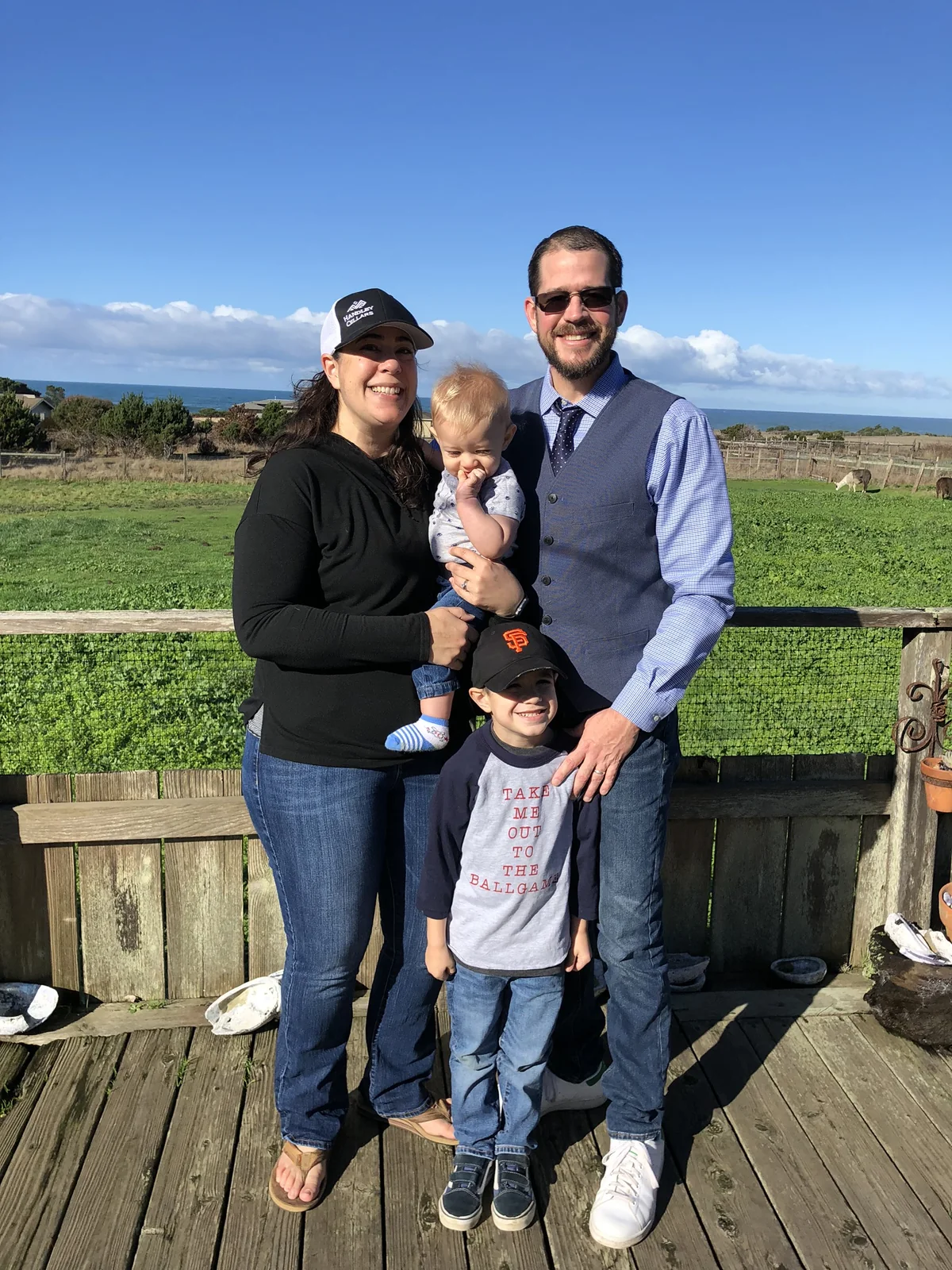
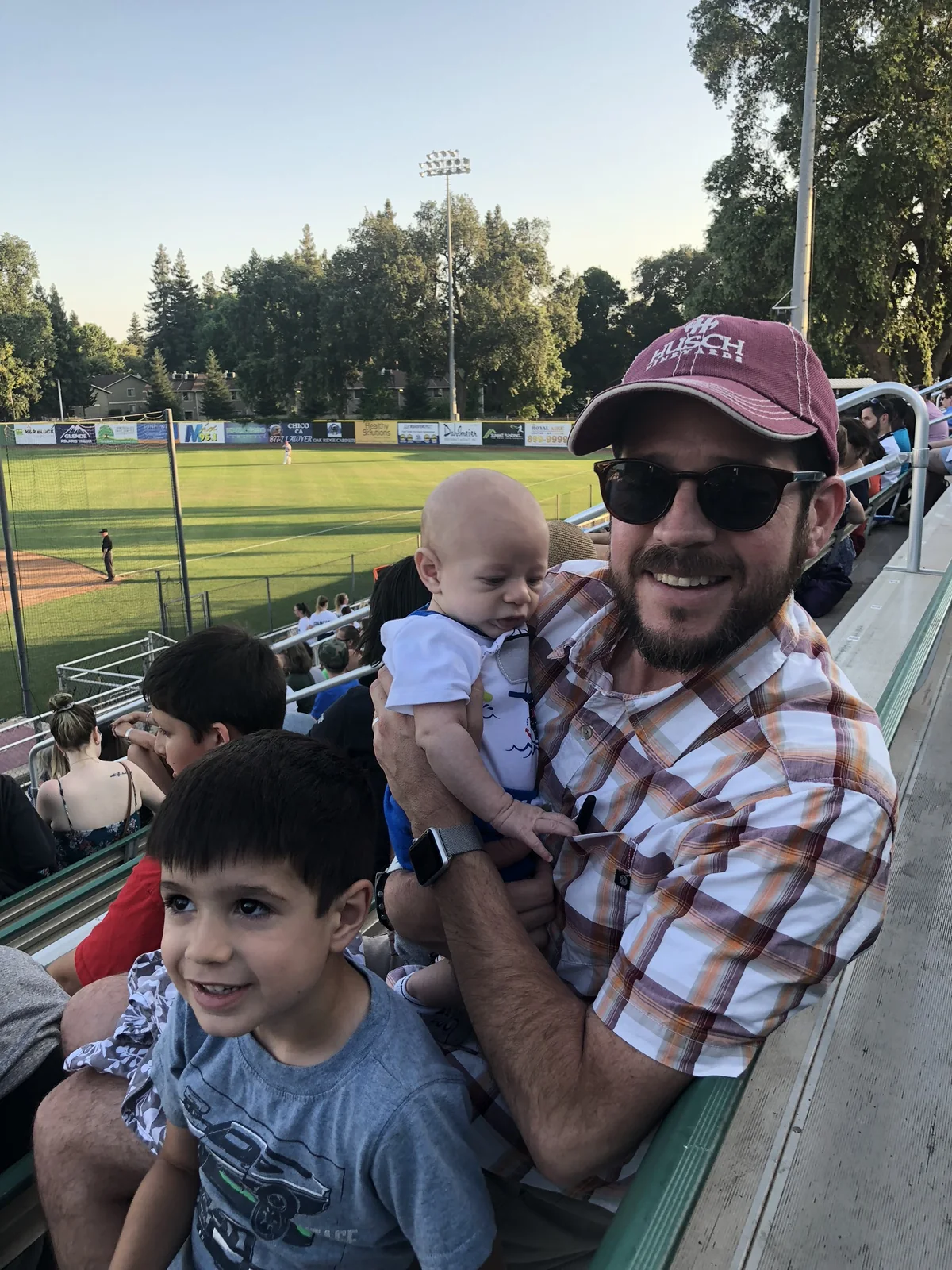
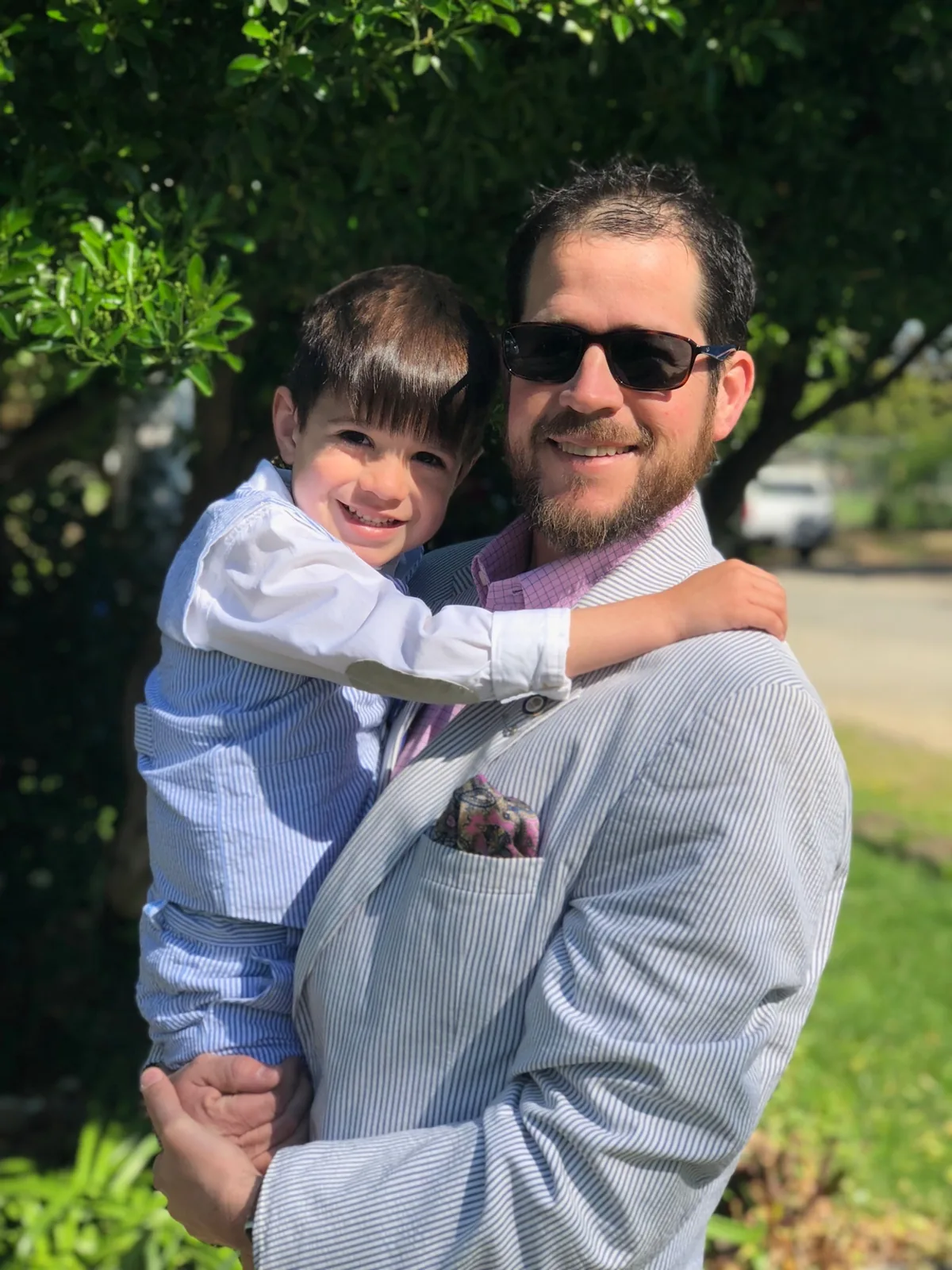
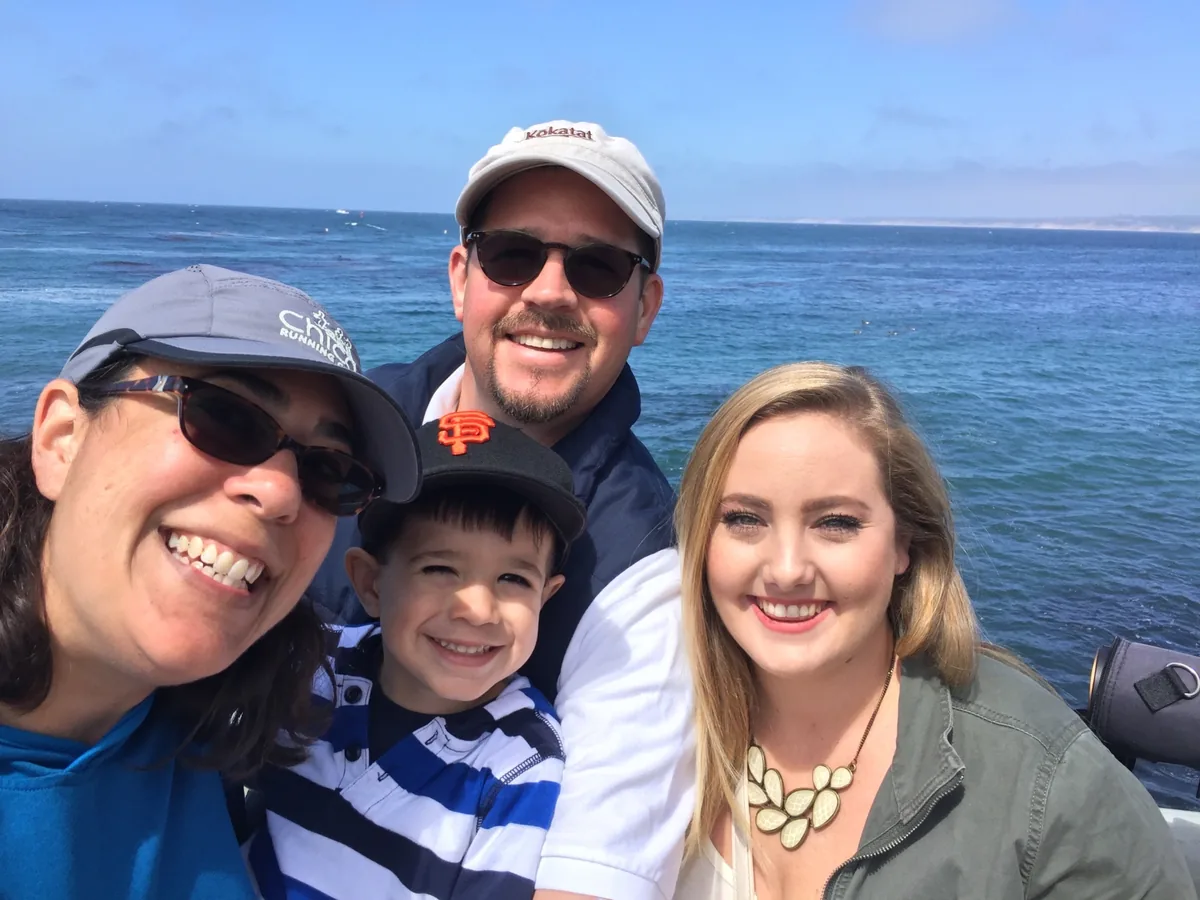
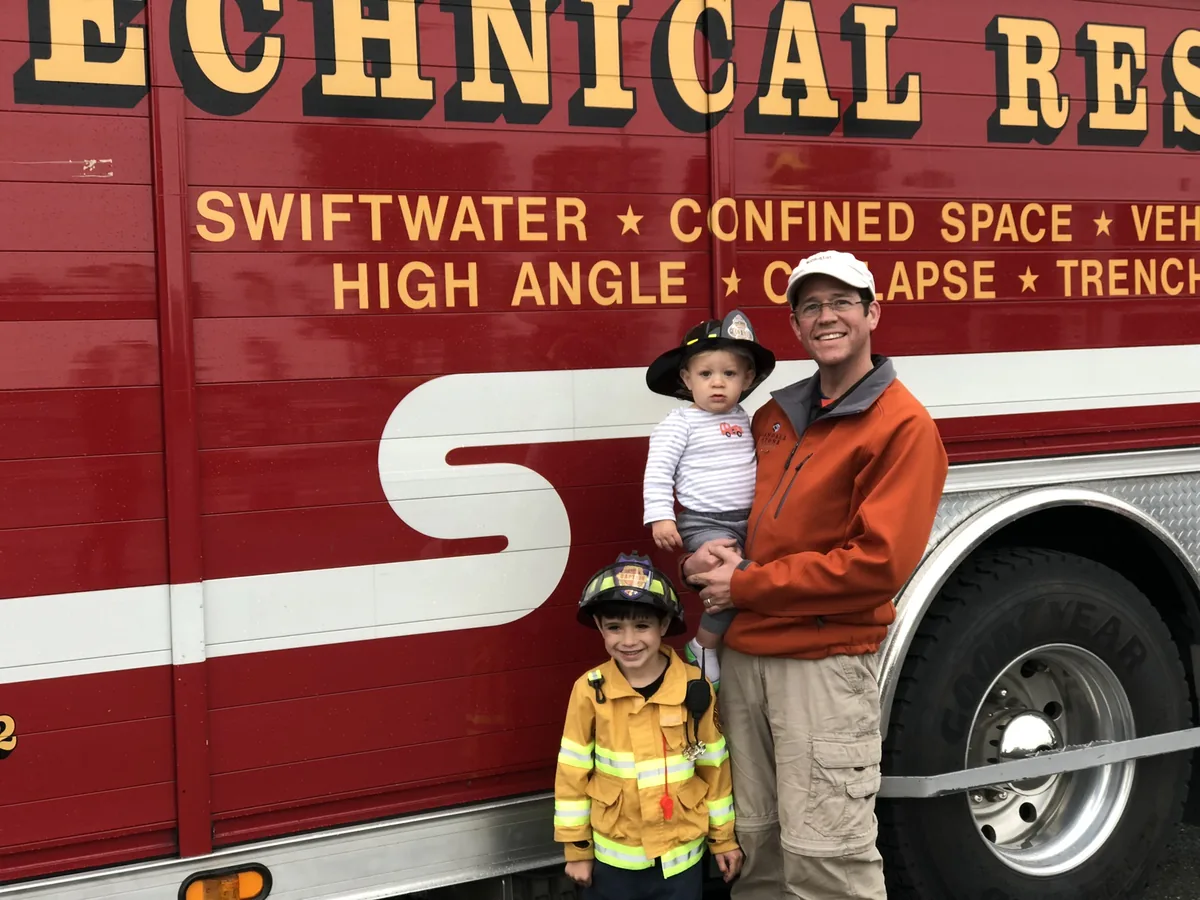
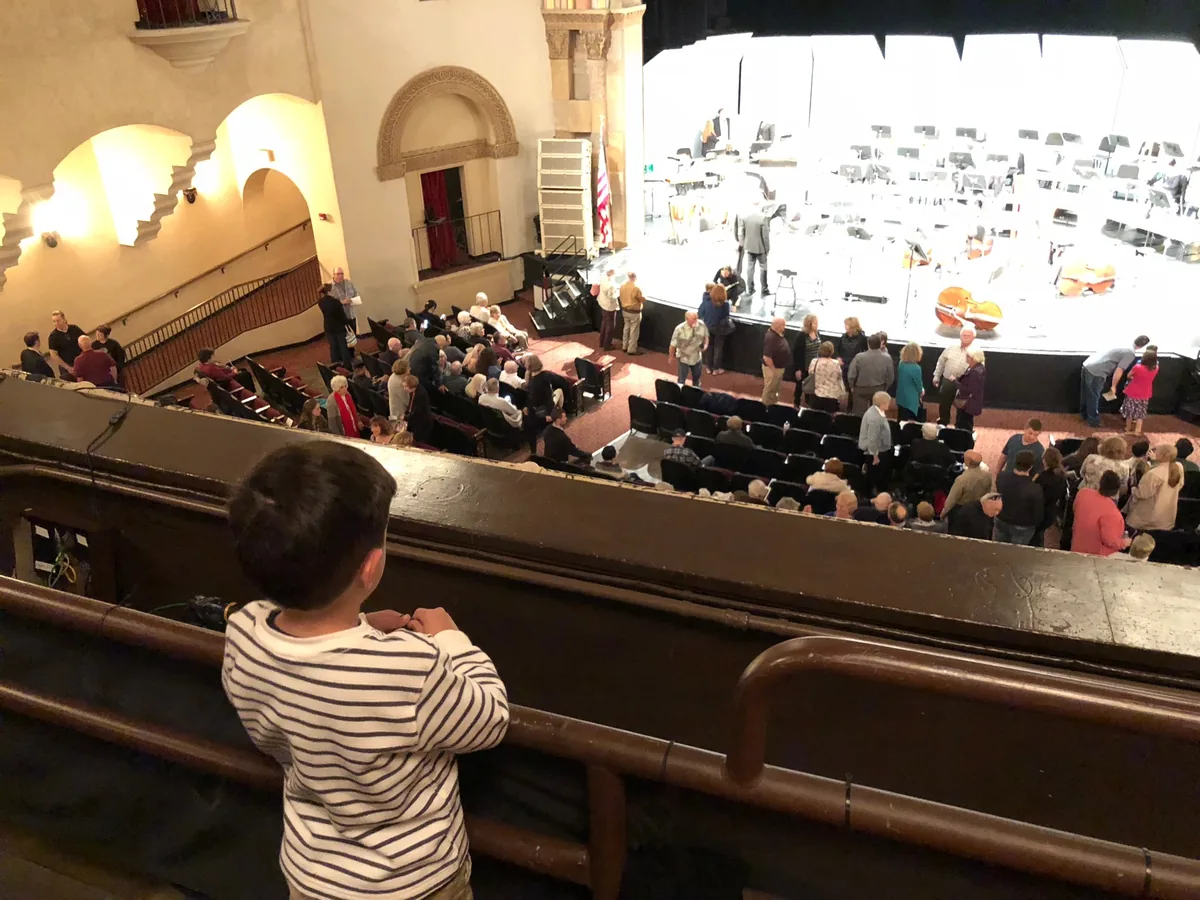
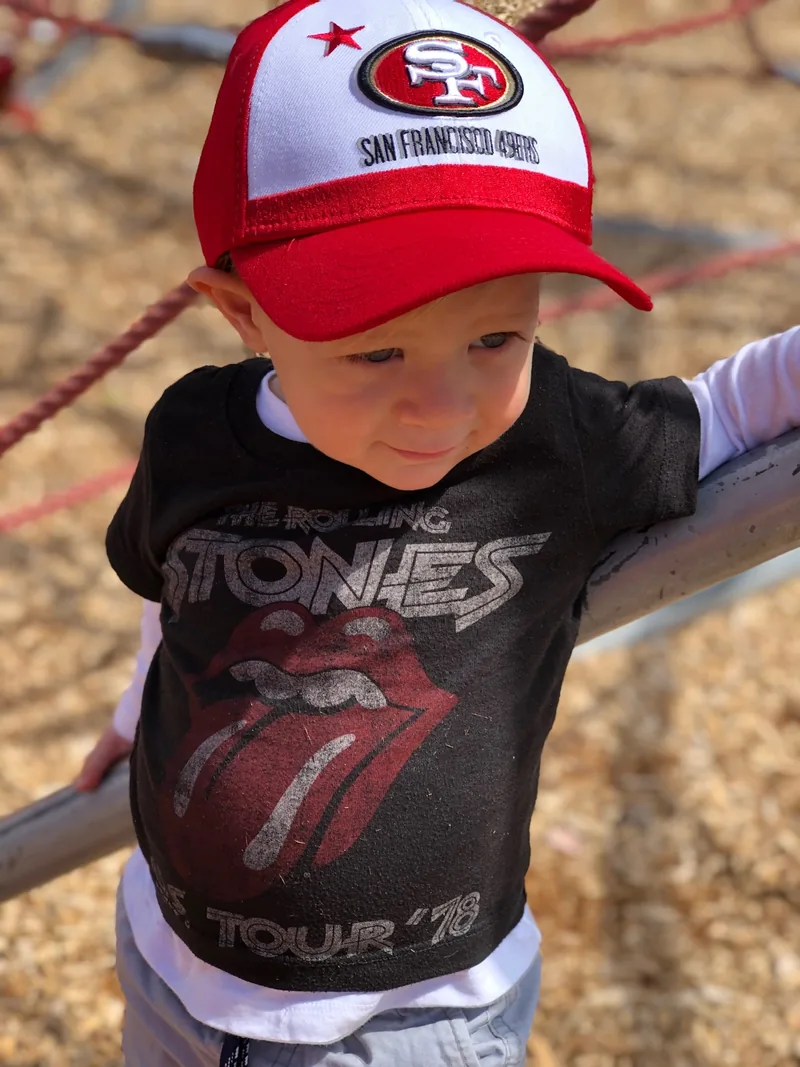
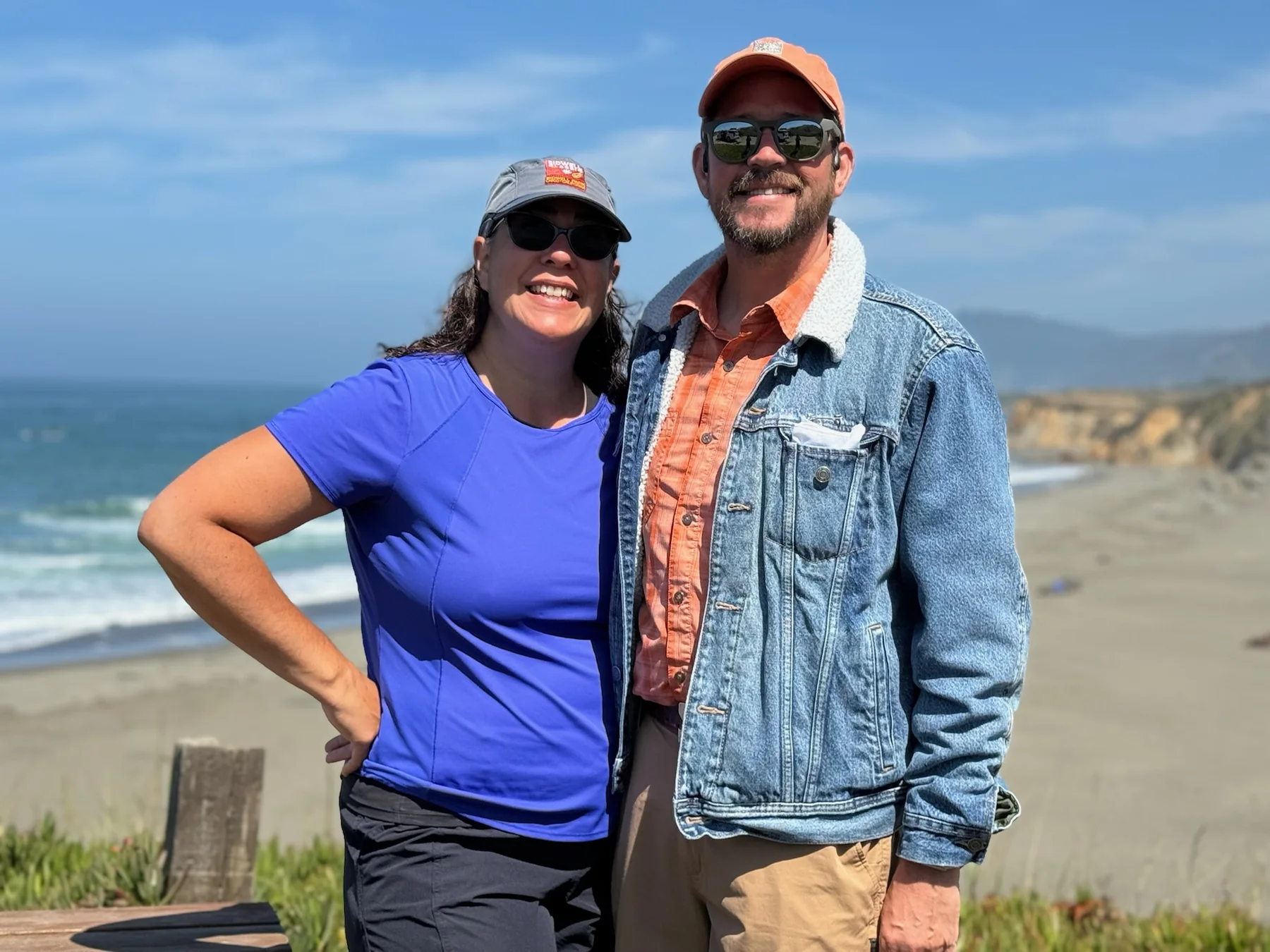
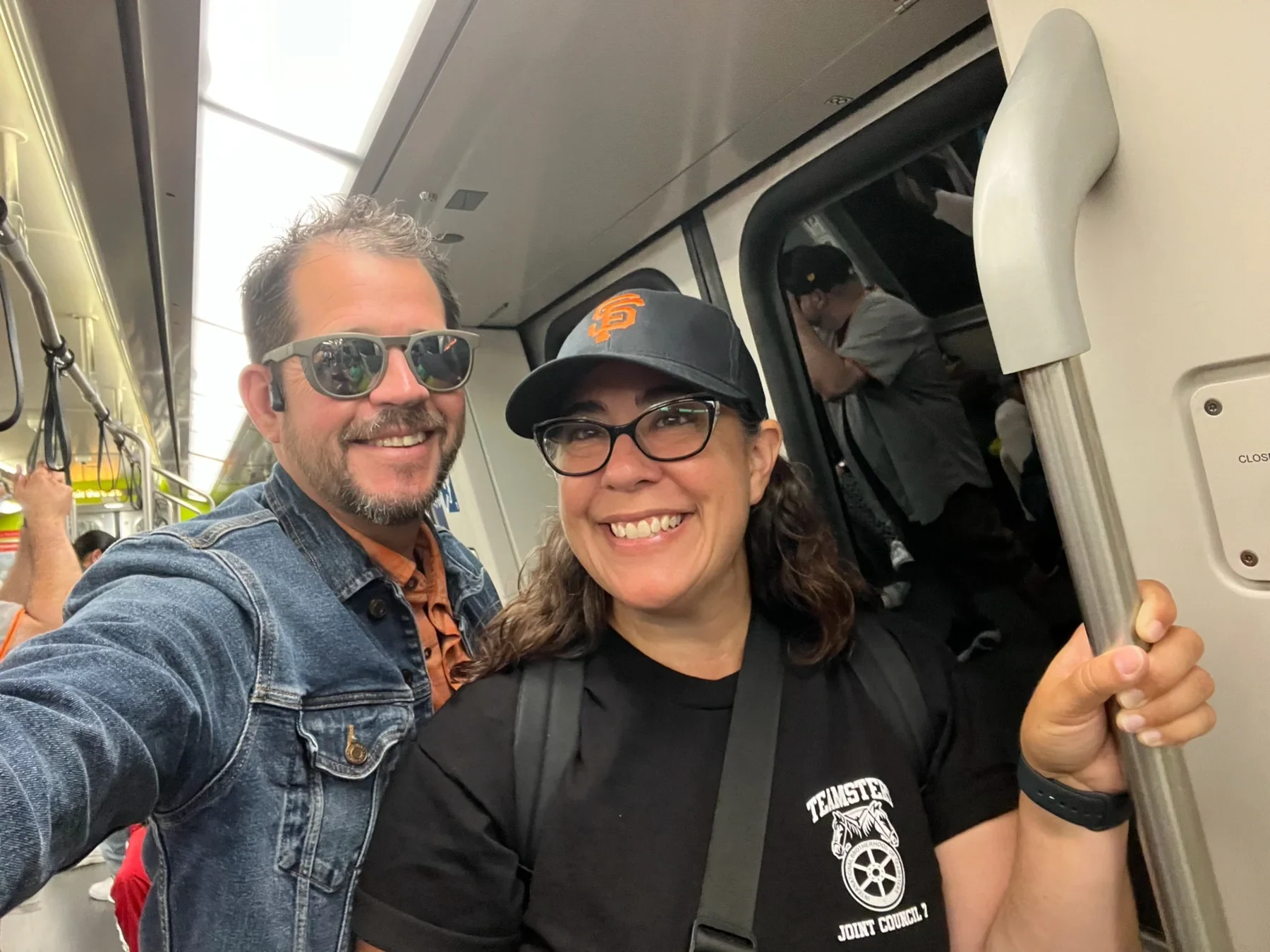
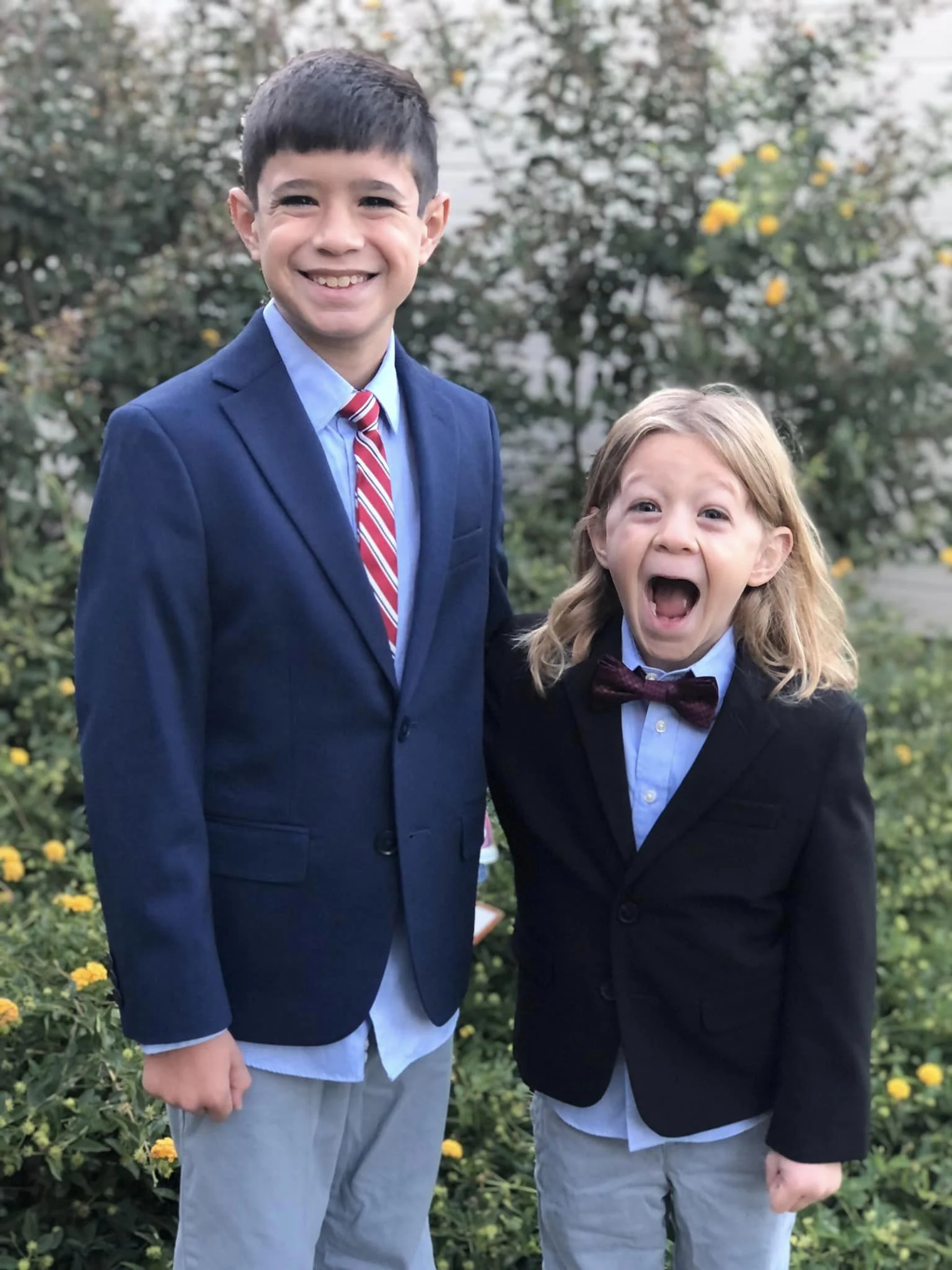
The photographs do not need to pretend every moment was ceremonial. A symphony balcony, a fire-rescue open house, a coastal day with Jenny, a ridiculous T-shirt, and a good suit in the yard carry more family history than a row of posed milestones.
Personal find · family dinner · reusable learning
The $3 table game did not survive the breadsticks.
The boys love Olive Garden. Krista and I love the boys. Those are related facts. The restaurant is considerably more popular with the children than the adults; the family evening turned out to be excellent anyway.
The little machine on the table offered us trivia for $3. The audacity. I used AI instead—which I call Ms Clairol, because only Ms Clairol knows for sure—to build a family game for two adults and two kids. Ten questions per round; four choices each; mixed ages and difficulty; no repeats.
We played eight rounds and 80 questions across science, animals, geography, Minecraft, swimming, skiing, soccer, theater, Spanish, California, the Pacific Northwest, Scouts, civics, money, amateur radio and the outdoors. Answers stayed hidden until everyone committed; every choice received an explanation; nobody had to endure 40 questions about sitcom actors or obscure professional athletes.
We loved it. Rhys kept asking for another round. That is not faint praise from a thirteen-year-old sitting in a restaurant after dinner; it is a fairly ruthless product test.
The useful part was context. The machinery pulled broad trivia toward our interests, travels, work, communities and usual haunts without turning the game into trivia about the Stone family—which would become insufferable. Our public trail is frankly absurd; privacy still matters, and pretending we have lived anonymous lives would just be stupid.
Giving the machinery a name does not make it a person. Ms Clairol is a joke, not an honorary fifth member of the family. The machinery needed context and a useful structure; what emerged was one of the best family games we have stumbled across in a long time.
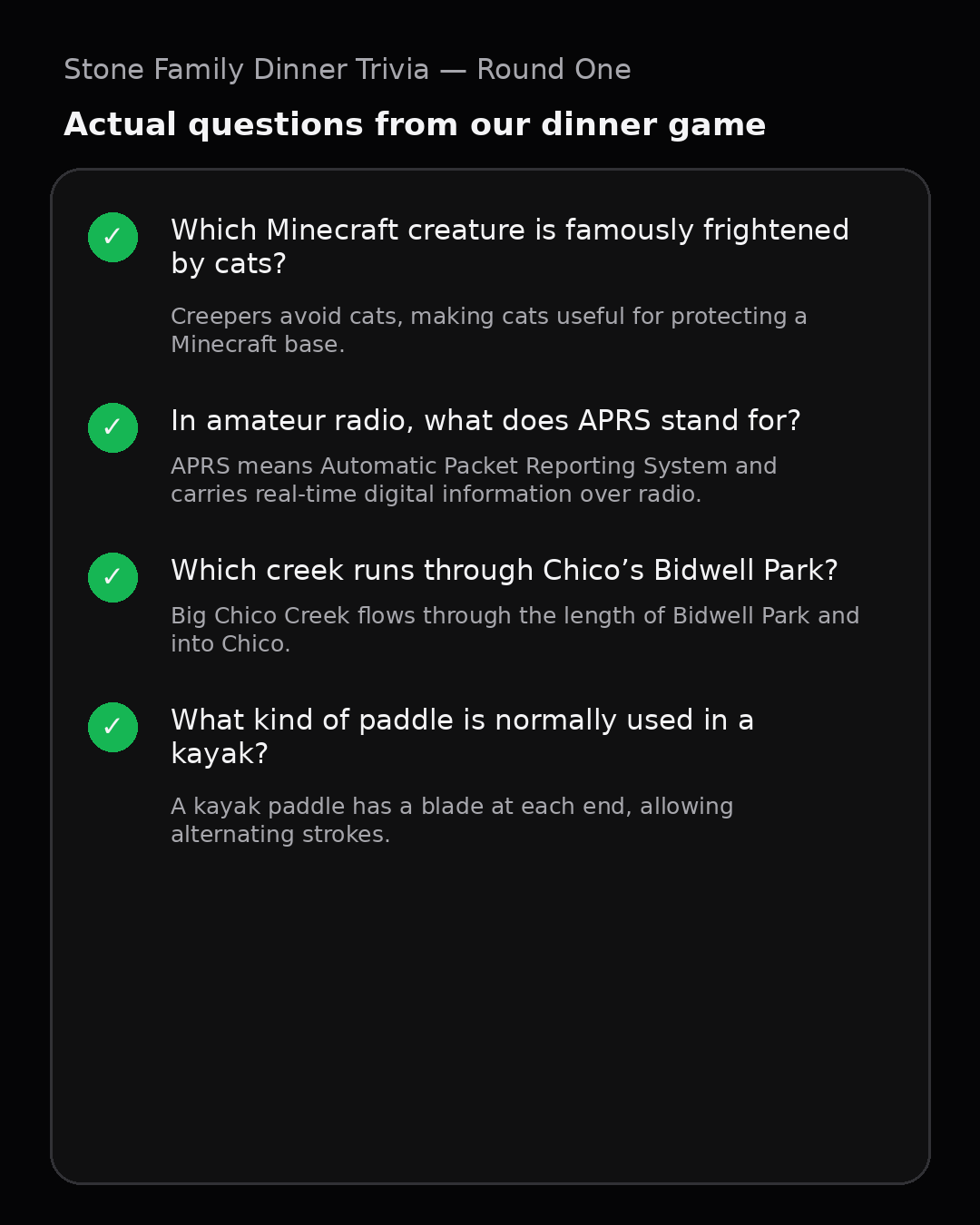
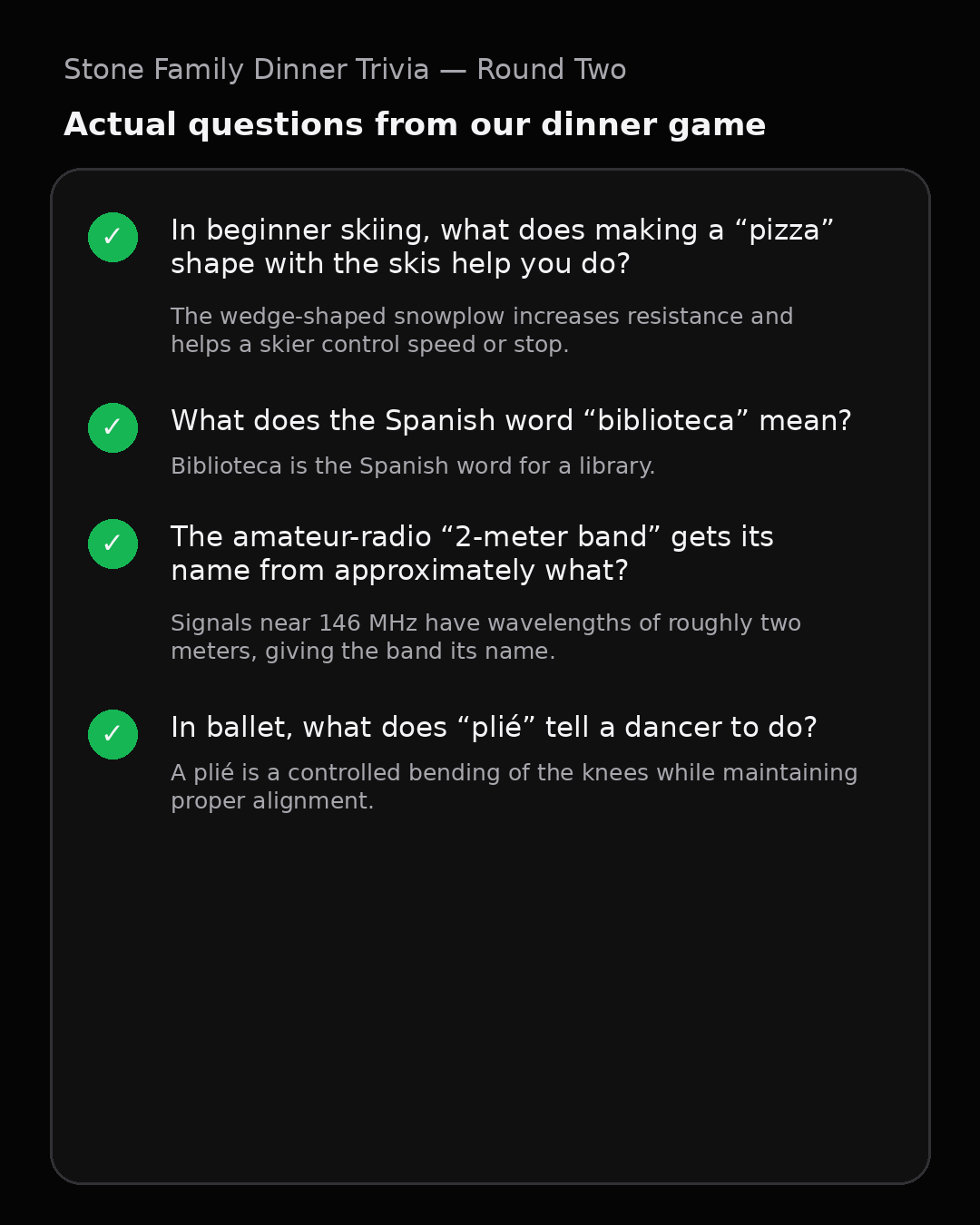
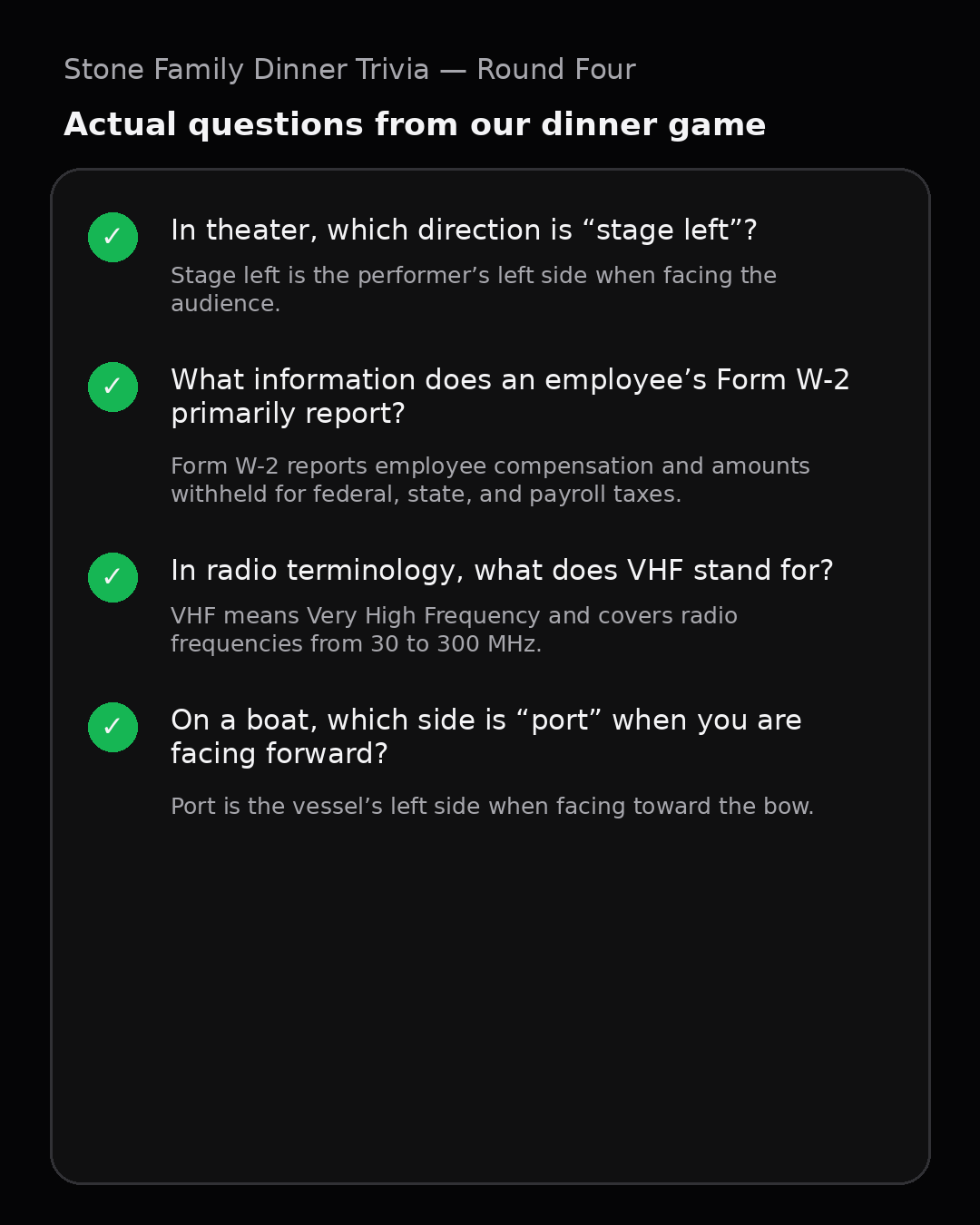
The social-media treatment was already on the screen.
The first instinct was to make promotional tiles explaining the discovery. The better answer was much simpler—the actual game already demonstrated the experience. The early rounds showed the question, the four choices and the family-specific range; the later score screens proved that the game kept going. Cleaned into 1080-by-1350 tiles, those screens became the social post.
That mattered because the format is instantly replicable. A family does not need our interests, our travel history or our strange accumulation of amateur-radio knowledge. It needs its own mix. The post was not “look what the machinery made.” It was “look what we figured out how to do with it.” I am bragging a little; it was a really cool find.
The reusable family instruction
Give our family a fresh 10-question dinner trivia quiz with four choices, mixed ages, playful difficulty and no repeated questions. Pull broad trivia toward our interests and familiar places without making the questions about us. Ask one question at a time; wait until everyone commits before revealing the answer; explain every choice.
The bigger find—this can teach almost anything.
Replace “family dinner trivia” with an amateur-radio license class, Spanish vocabulary, middle-school science, tax concepts, geography, theater terms or any other subject. Keep the loop—one question, four plausible choices, commitment before revelation, an explanation for every option, missed concepts tracked and revisited, difficulty adjusted as the learner improves.
That is trivia with a purpose: real-time retrieval practice, immediate feedback, and a format the family will actually keep doing. The drill can adapt while it is happening—changing the mix, revisiting a miss from another angle and moving with the learner instead of handing everyone the same static stack. The K6RCS resource directory carries the licensing and technical-study version.
Rosas de María · family life
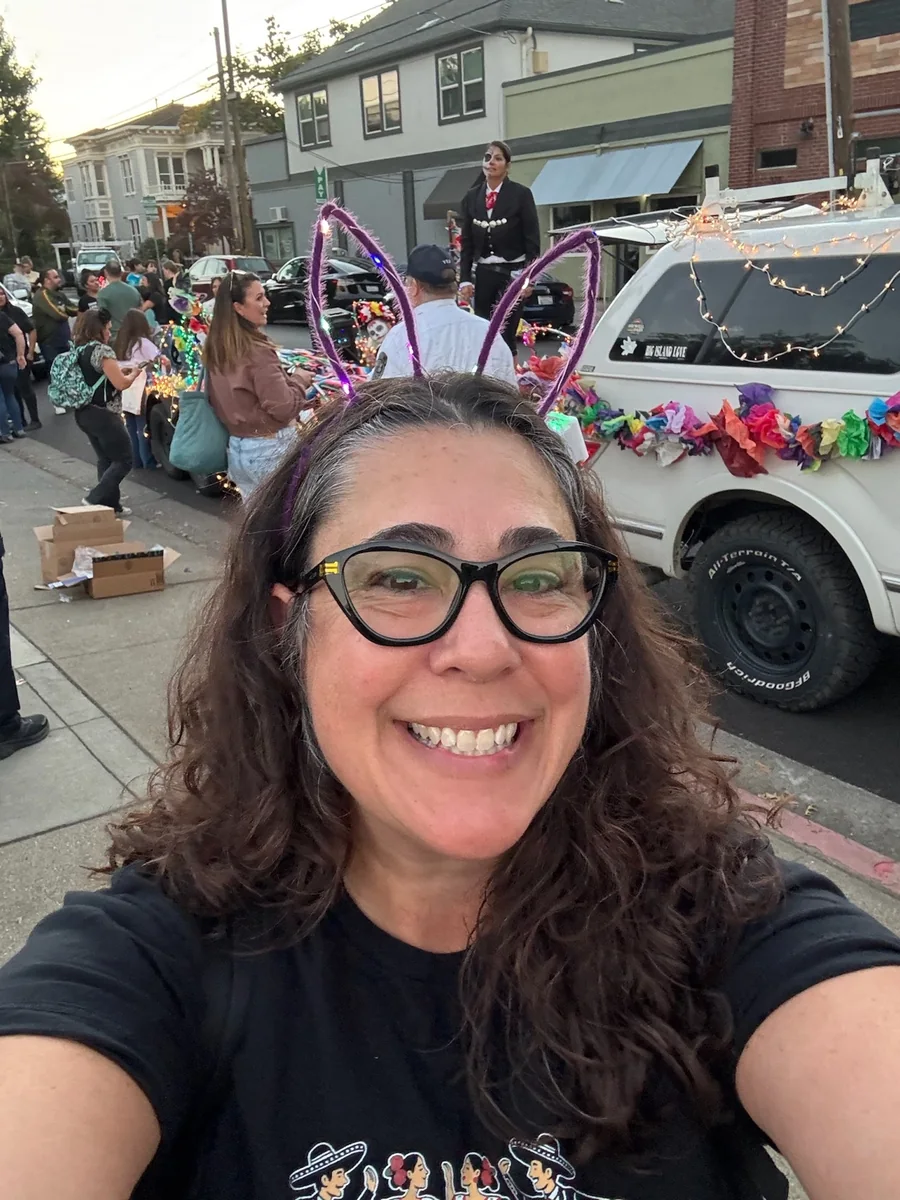
Parade of Lights.
Rhys, Karden and Krista at a Rosas de María Parade of Lights performance.
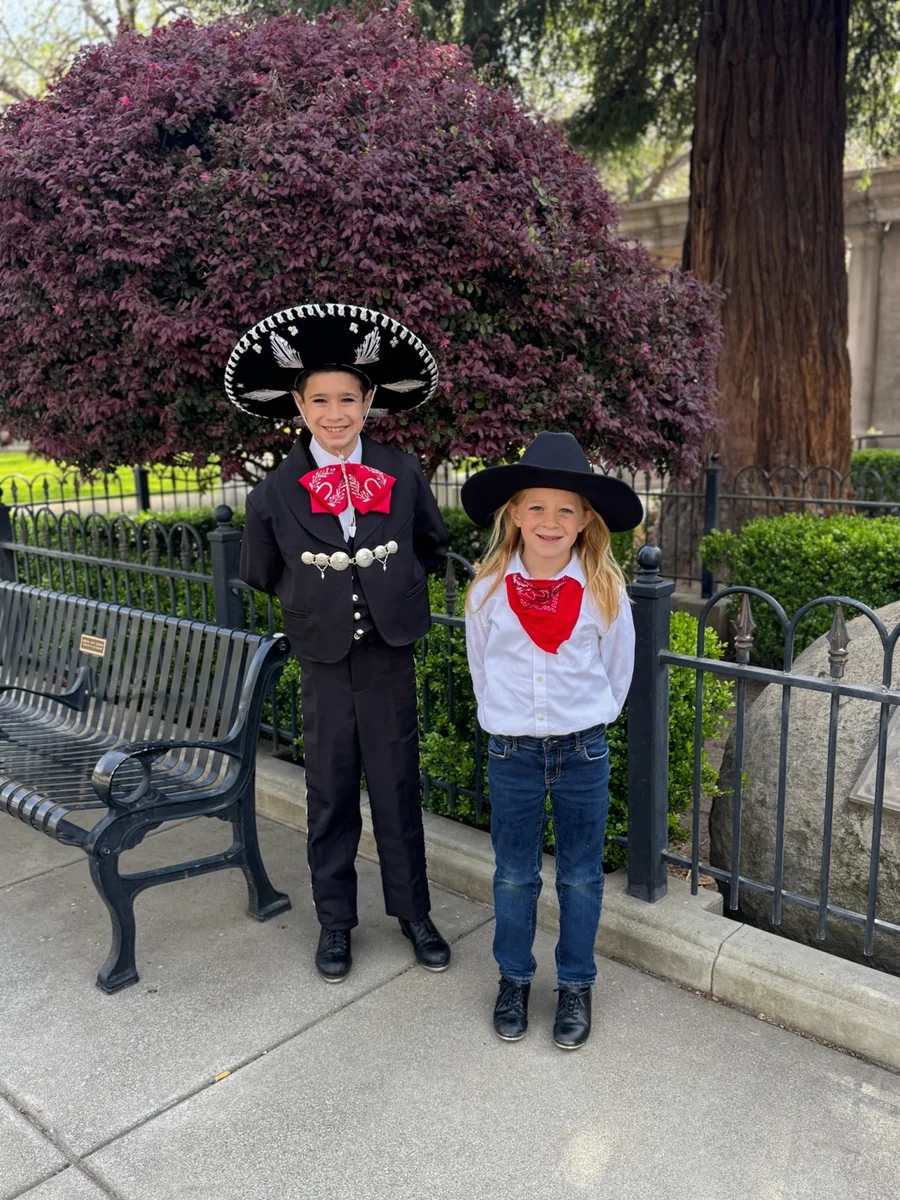
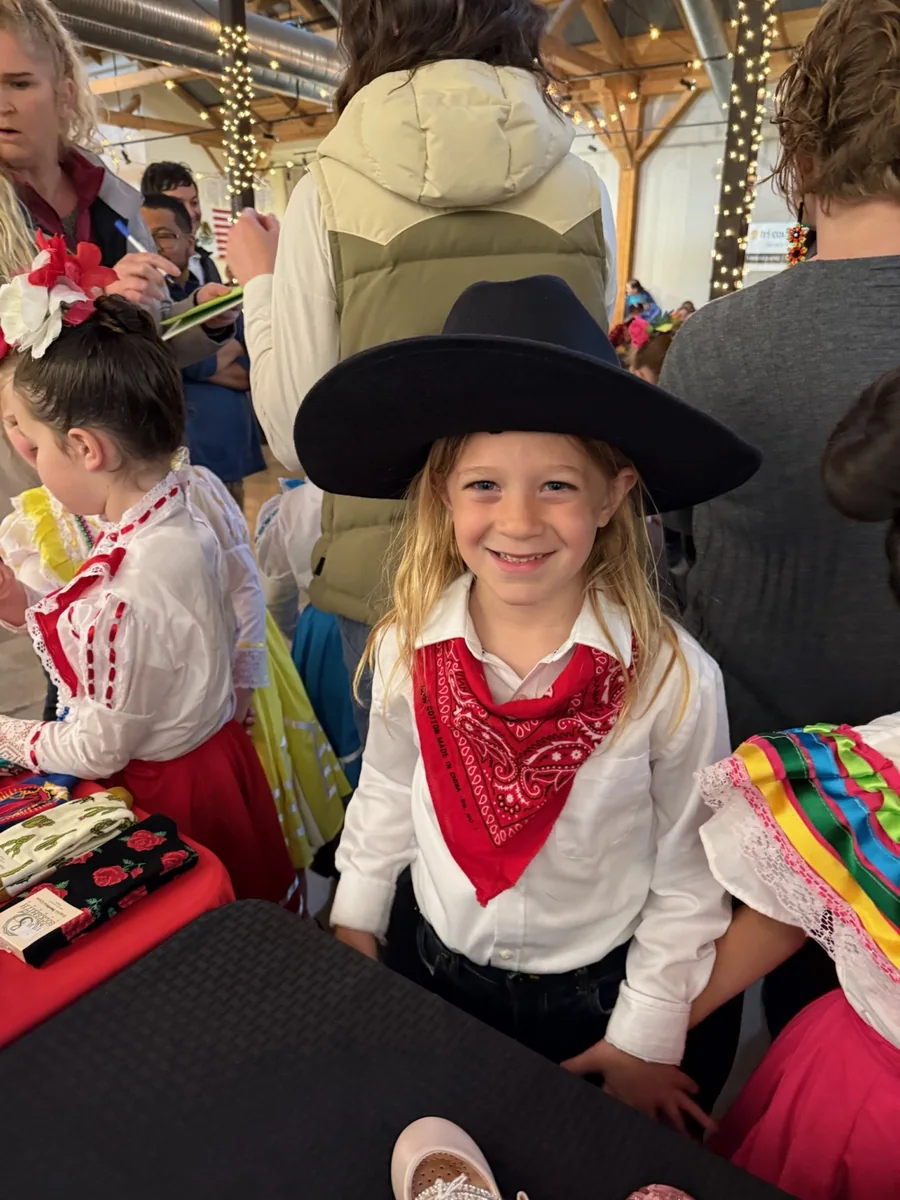
A tax calendar with children in it
The dates are funny. The planning was not.
Karden arrived at Enloe on April 15, 2018, the traditional individual Tax Day. Before the birth, family recollection has Krista and our friend Marybeth dancing around the delivery room trying to encourage labor and get Krista’s water to break.
Randall’s birthday falls on May 15, the traditional Form 990 deadline for calendar-year nonprofits. That birthday came before he became an Enrolled Agent, co-founded nonprofit organizations, or began serving on their boards. This would all sound suspiciously well planned if a competent tax planner would not have preferred December 31.
Randall and Krista
Long-running volunteer work changed when the boys arrived. Randall’s roughly sixteen years with Special Olympics Butte County, including about eight years as Executive Director, eventually collided with family scheduling and volunteer insurance requirements. Krista’s nearly two decades of League of Women Voters board service ended in the same broad life transition. Civic organizations often run on retiree-compatible calendars; young children are less impressed by the governance model.
Krista Stone, MSW: more than three decades in social work, beginning with approximately 8½ years of domestic-violence case management at Catalyst Domestic Violence Services, followed by an approximately 20-year Children’s Services Division career, counseling, hospital social work, nonprofit governance and community service.
The boys
Both boys are bilingual and fluent for their grade levels in English and Spanish. They swim competitively with Chico AquaJets, bike for transportation, participate in Virtues and Ballet Folklórico, play youth sports, use GMRS, and are beginning snow skiers. Rhys → · Karden →
Rhys, now 13 and in eighth grade, has run cross country since sixth grade in fall 2024 and also participates in Chico Striders, soccer, baseball, CJHS drama and Scouts. He has completed the Swimming Merit Badge and First Aid instruction while working toward Tenderfoot; his continuing interests include canoeing, small-boat sailing, wilderness survival, emergency preparedness, search and rescue, archery, shooting sports and radio.
Karden swims with AquaJets, plays Eastside Little League baseball, roller skates and skateboards. He also shares his dad’s love of music, particularly at high volume, preferably in a residential area.
How we move
We drive when it makes sense. We also walk, run, bike, use Class IV lanes, ride EUCs, swim, kayak, ski, snowshoe, sail, and work out the transition between them. Team Stone is the public home for those travel and continuity systems.
How we publish
Family photographs are used with permission and context. School routines, live travel, exact routes, private schedules, and details that would burden the boys later stay off the public site.
Family vitae
Individual family records.
Krista, Rhys, and Karden each have an individual family vita preserving activities, organizations, skills, service, and public history. The children’s profiles do not publish live schedules, routes, contact details, or tracking information.
Krista Stone, MSW
Butte County CSD · Enloe Hospital · CSU Chico Title IV-E · Chris Cox Counseling · First Aid/CPR · Shalom · Rosas de María · K6KEG
Rhys Stone
Cross country · Chico Striders · AquaJets · Scouts and merit badges · sailing · drama · Ballet Folklórico · soccer · baseball · skiing · GMRS
Karden Stone
AquaJets · Eastside Little League · Ballet Folklórico · Virtues · roller skating · skateboarding · skiing · music · GMRS
Earlier years
Before the family expanded, the archive was mostly Randall and Krista.
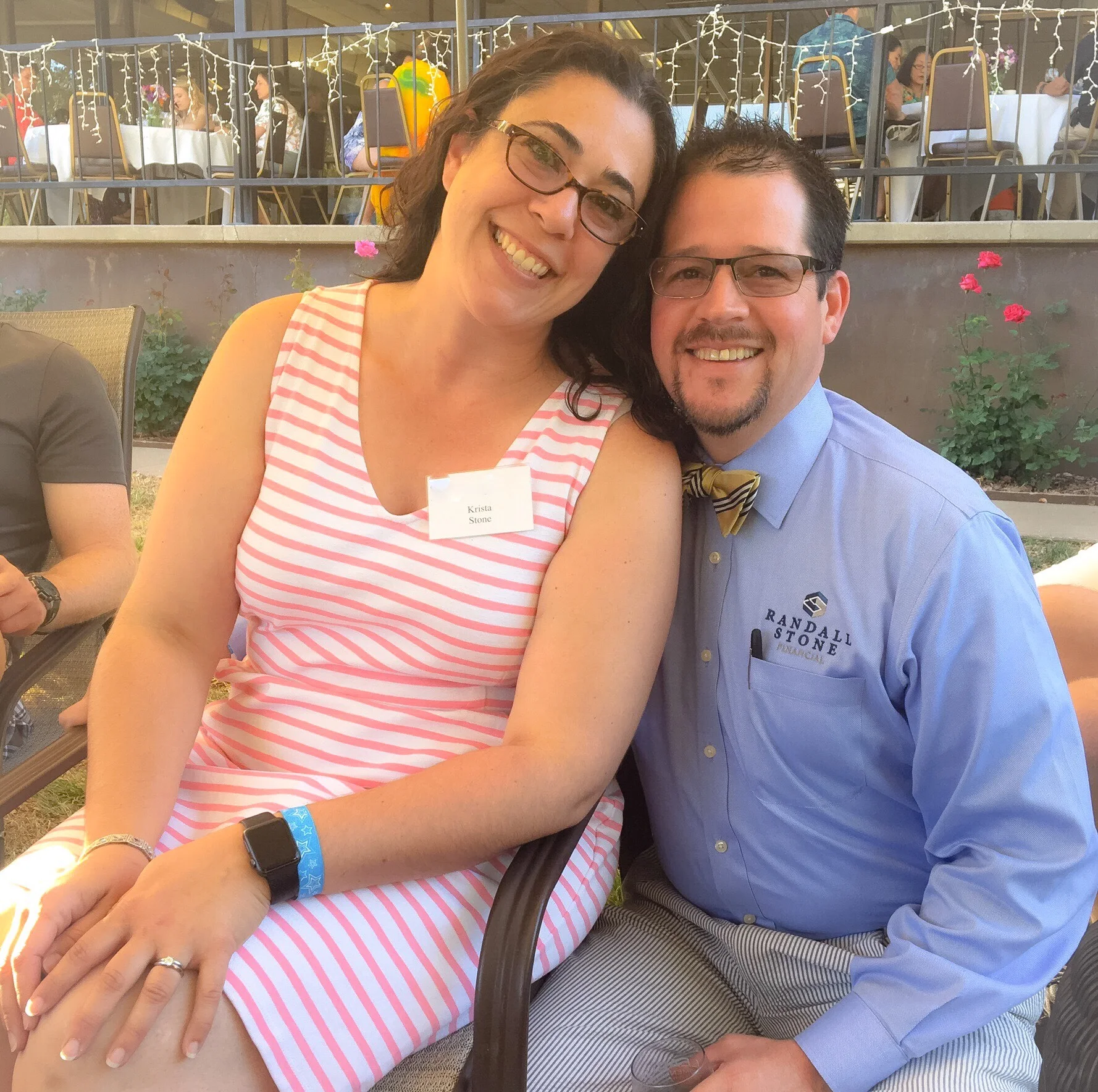
The later family story is full of schools, pools, performances, radios and transportation logistics. These earlier frames matter because they remember the simpler two-person version: travel, community work, formal events and ordinary time together before parenting became the organizing system for almost everything else.
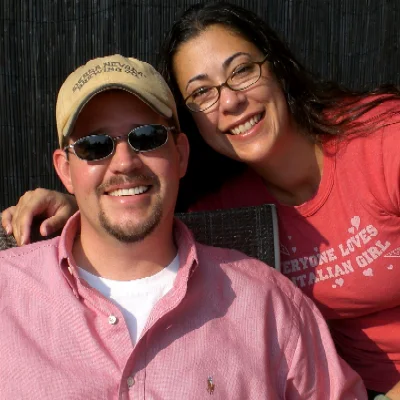
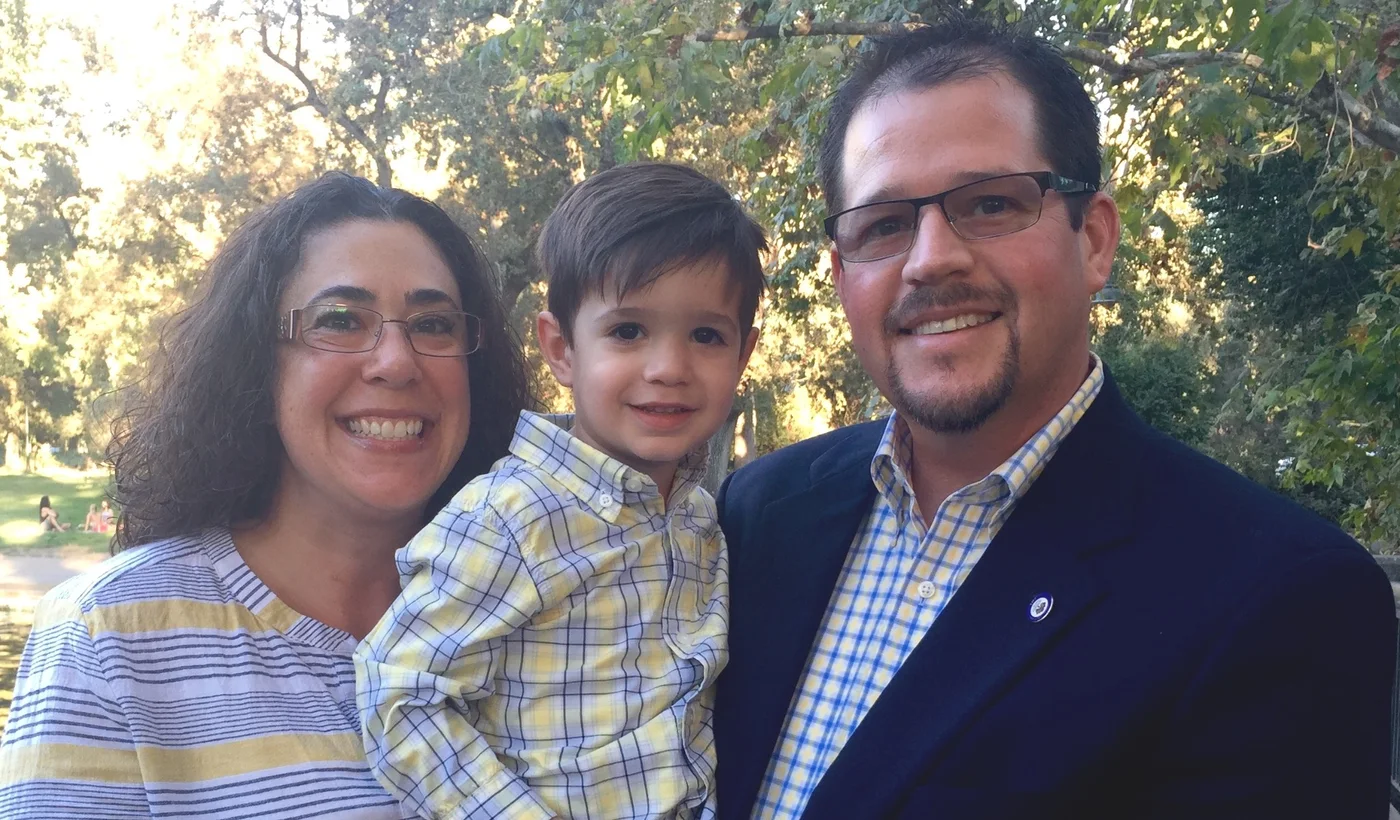
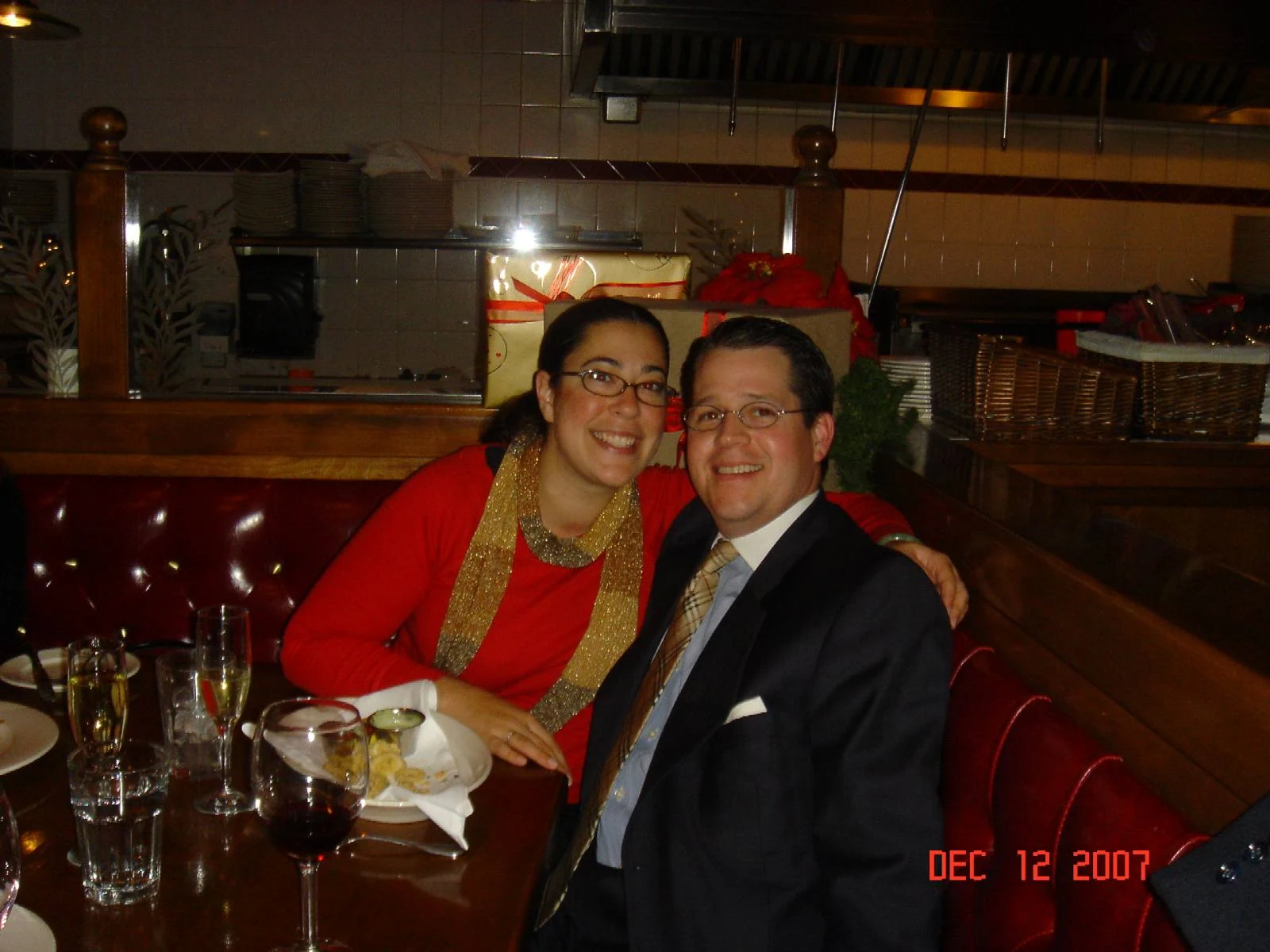
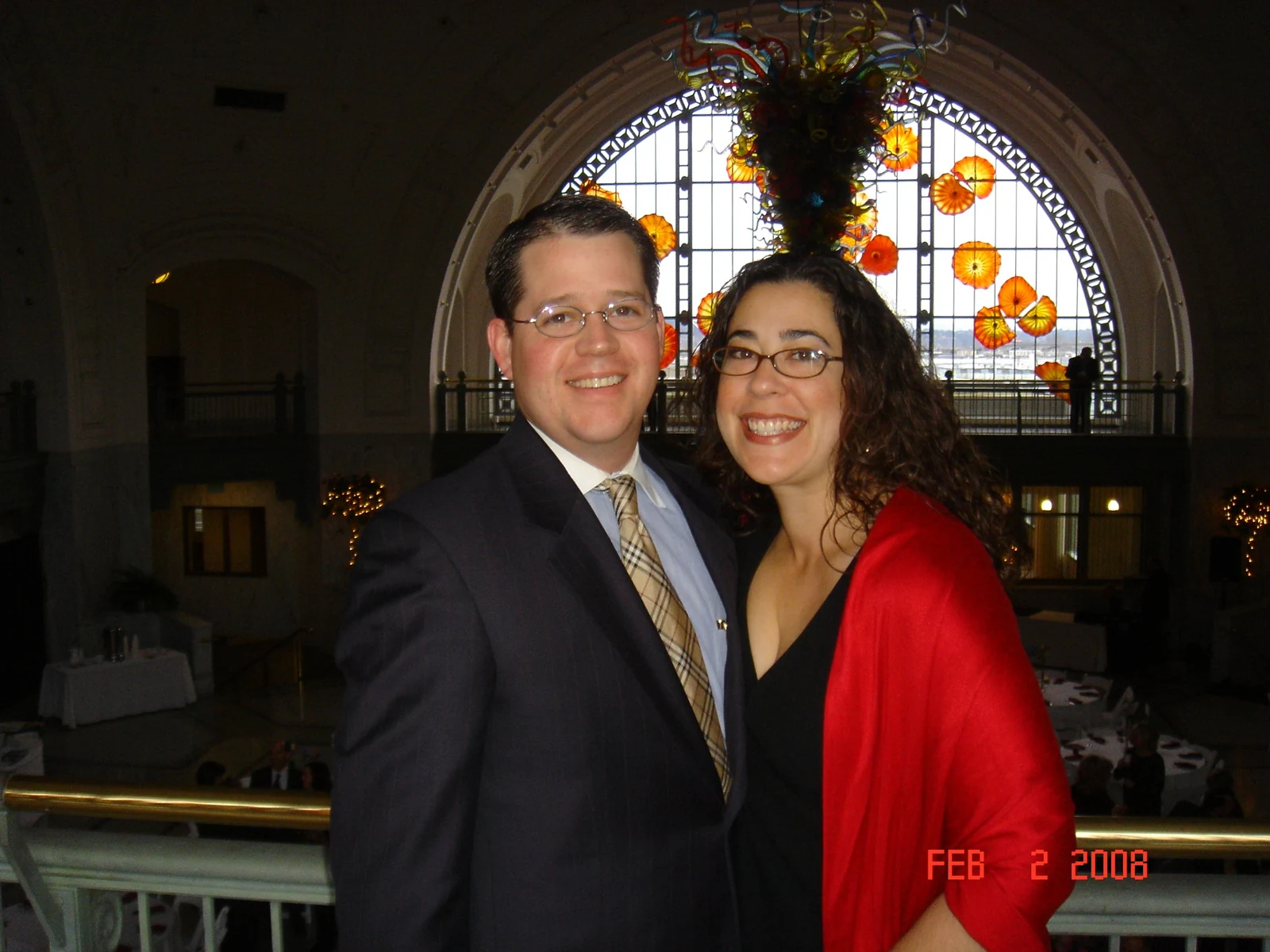
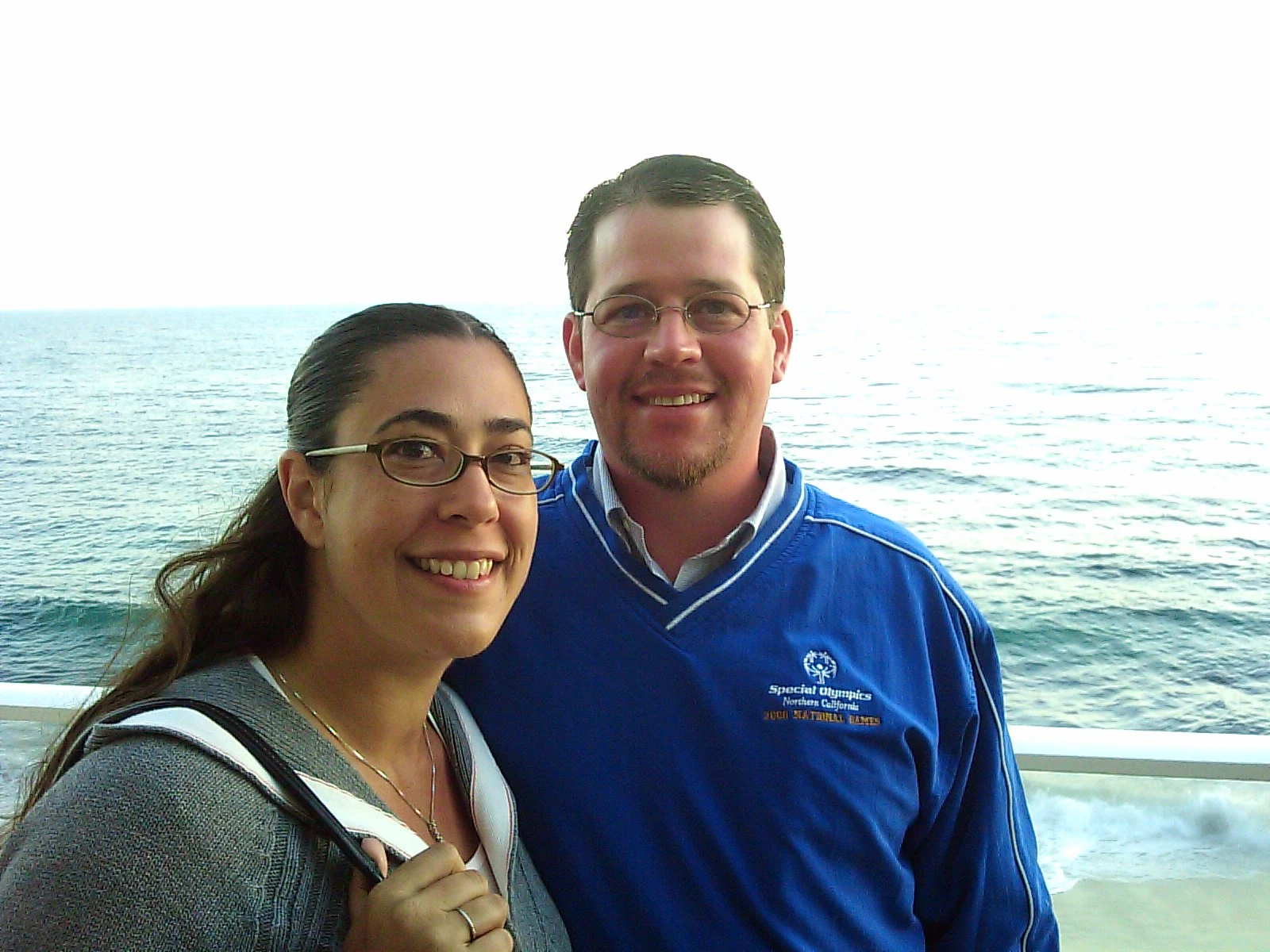
Special Olympics and winter travel were already shared parts of life before parenting became the dominant logistics system. Special Olympics history · Outdoor history

Family places
Public policy eventually becomes somebody’s ordinary Saturday.
Parks, pools, schools, sidewalks, trails, and community programs matter because families use them. That is the point of the infrastructure and the budget in the first place.
Family archive
The public record should still remember the ordinary years.
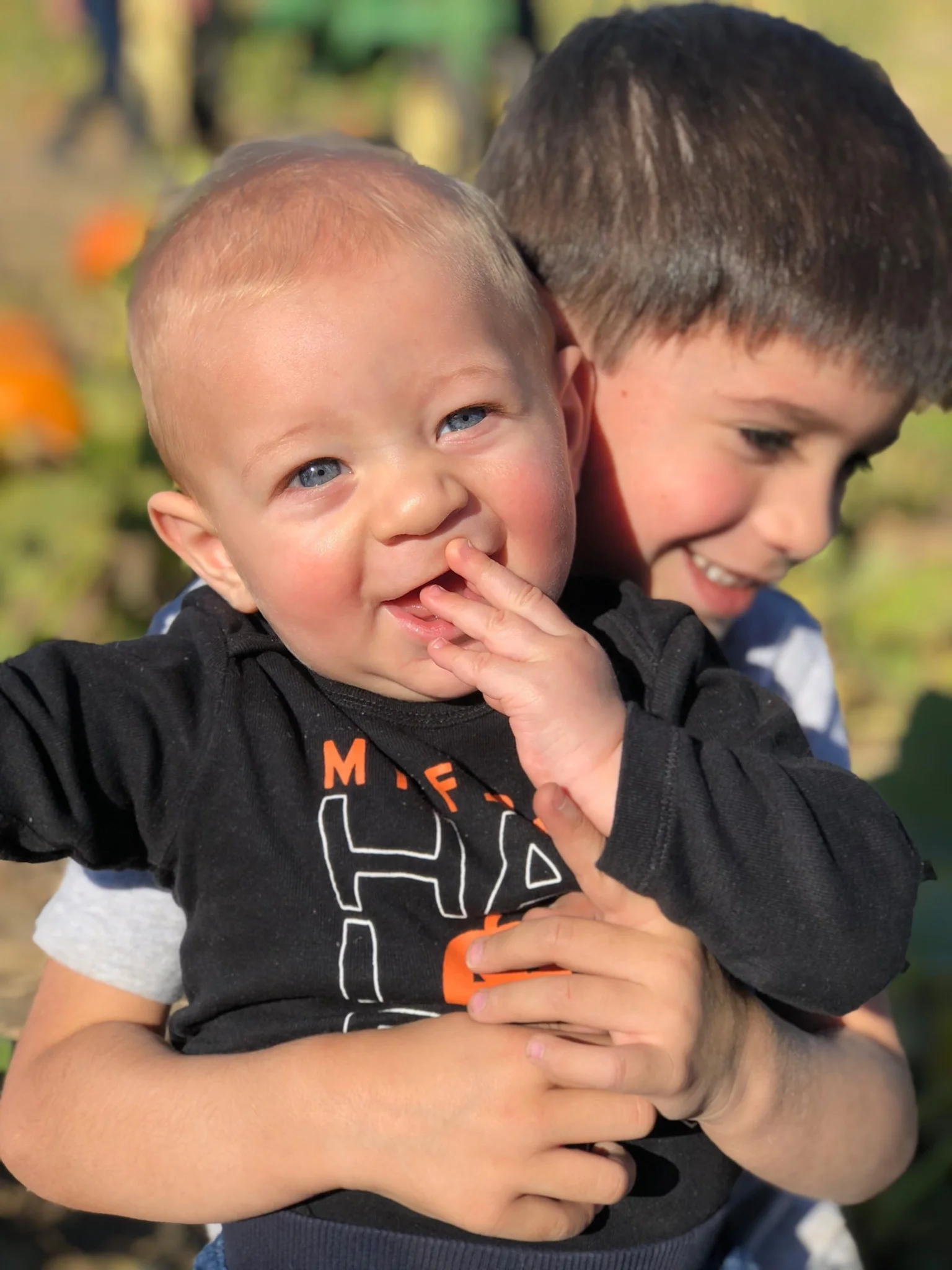
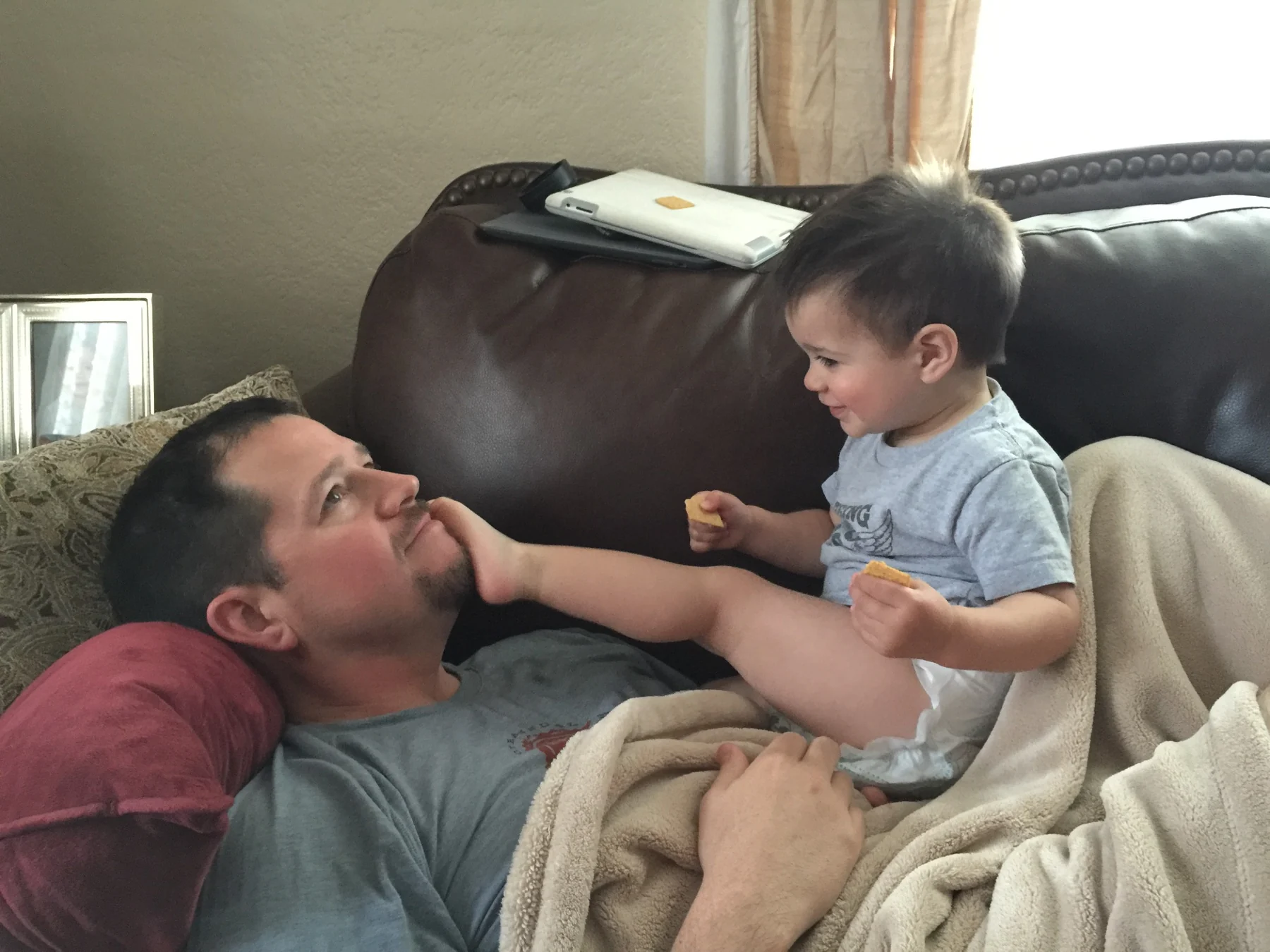
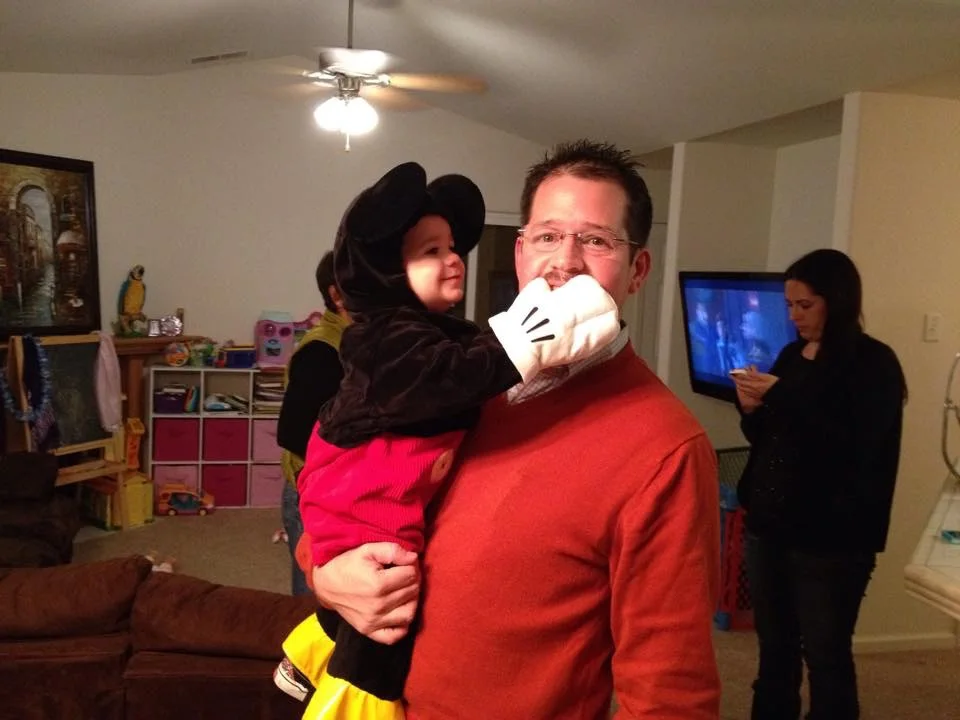
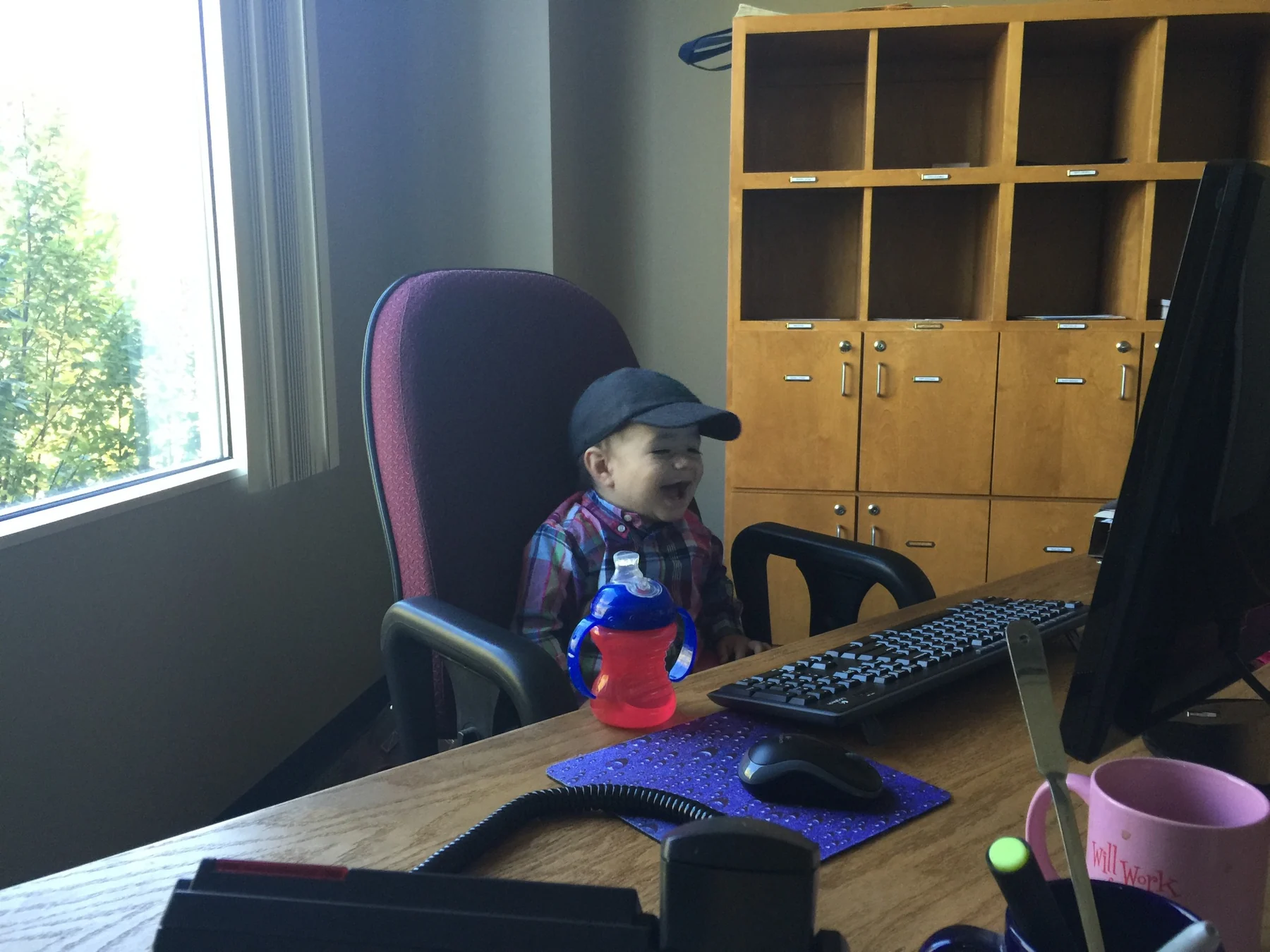
Family history is not a list of current activities. It also includes the close-up years, indoor adventures, long drives, small routines, and the gradual expansion from two adults into a mobile operating system with opinions.


Current family life
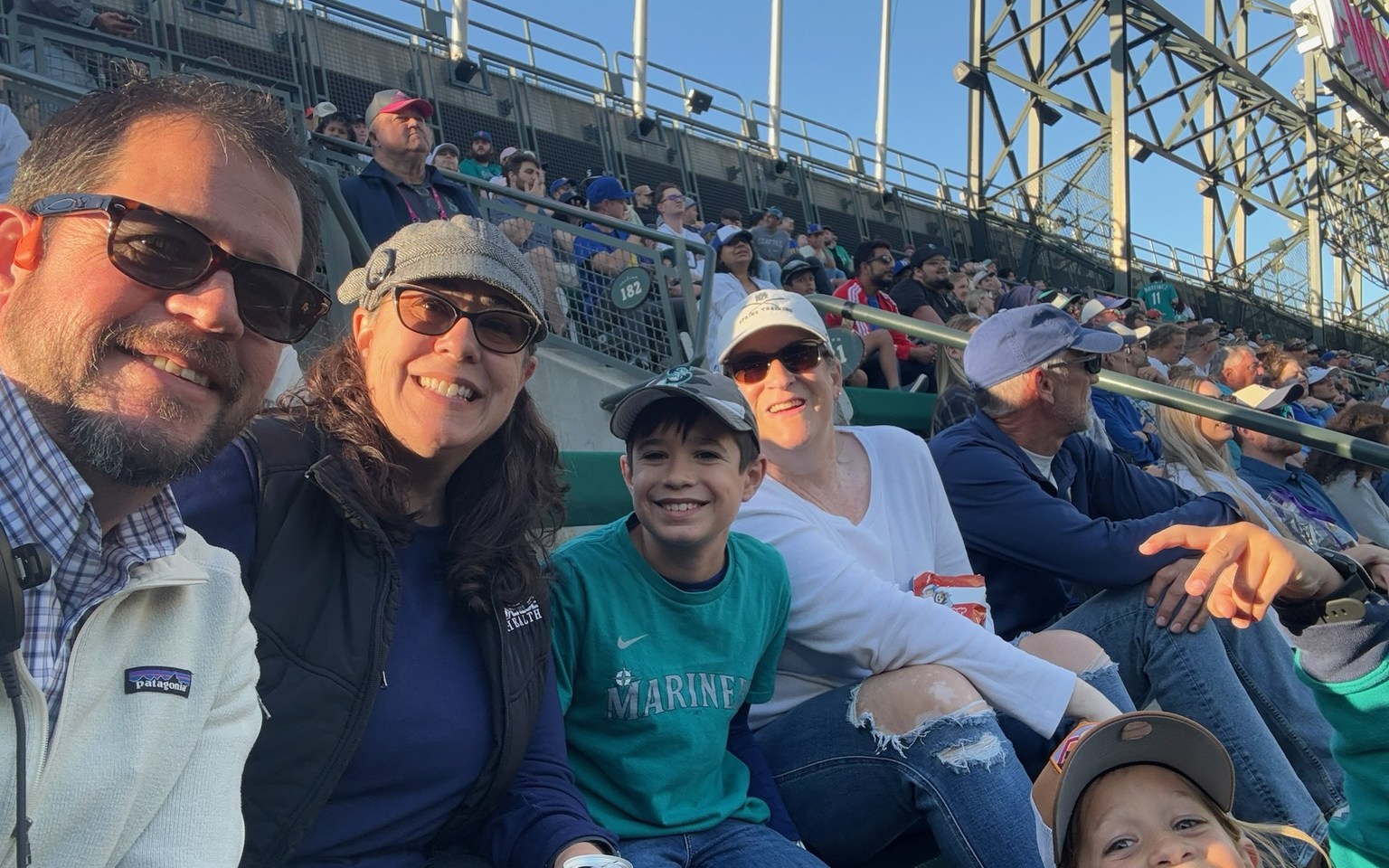
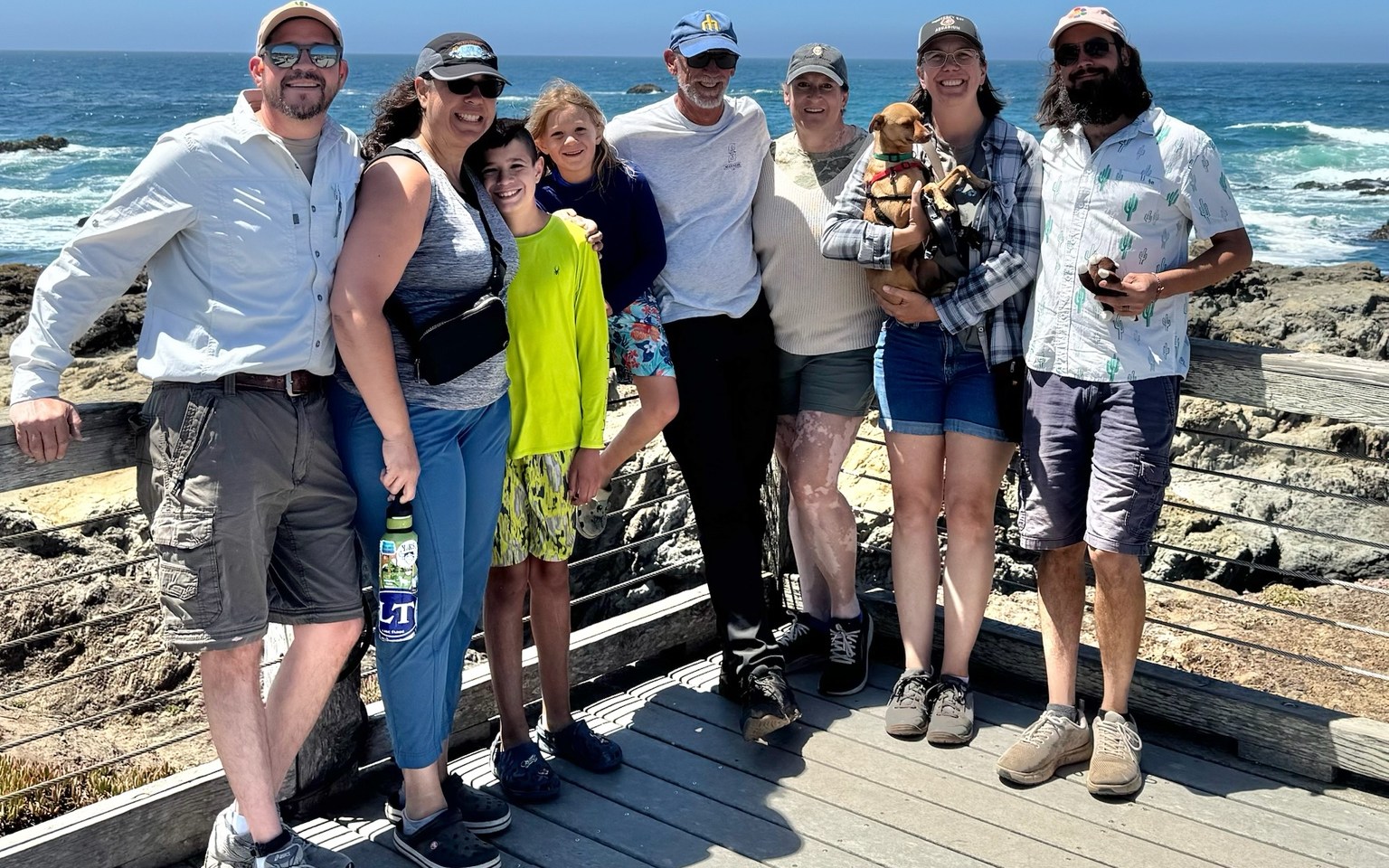
Home, travel, relatives, ballparks, coast, and trail.
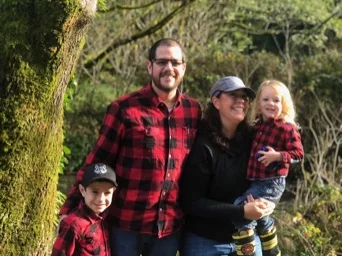
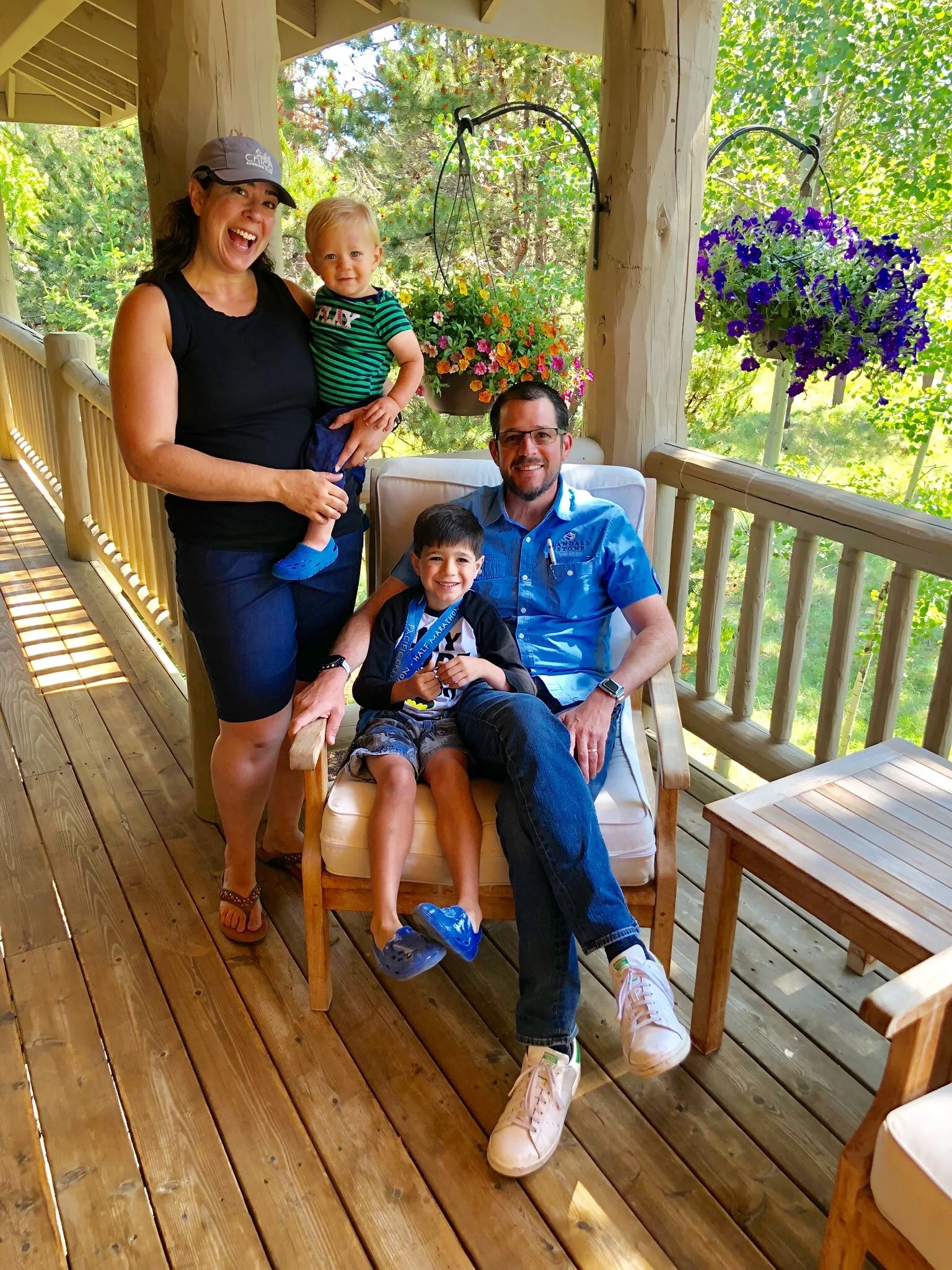
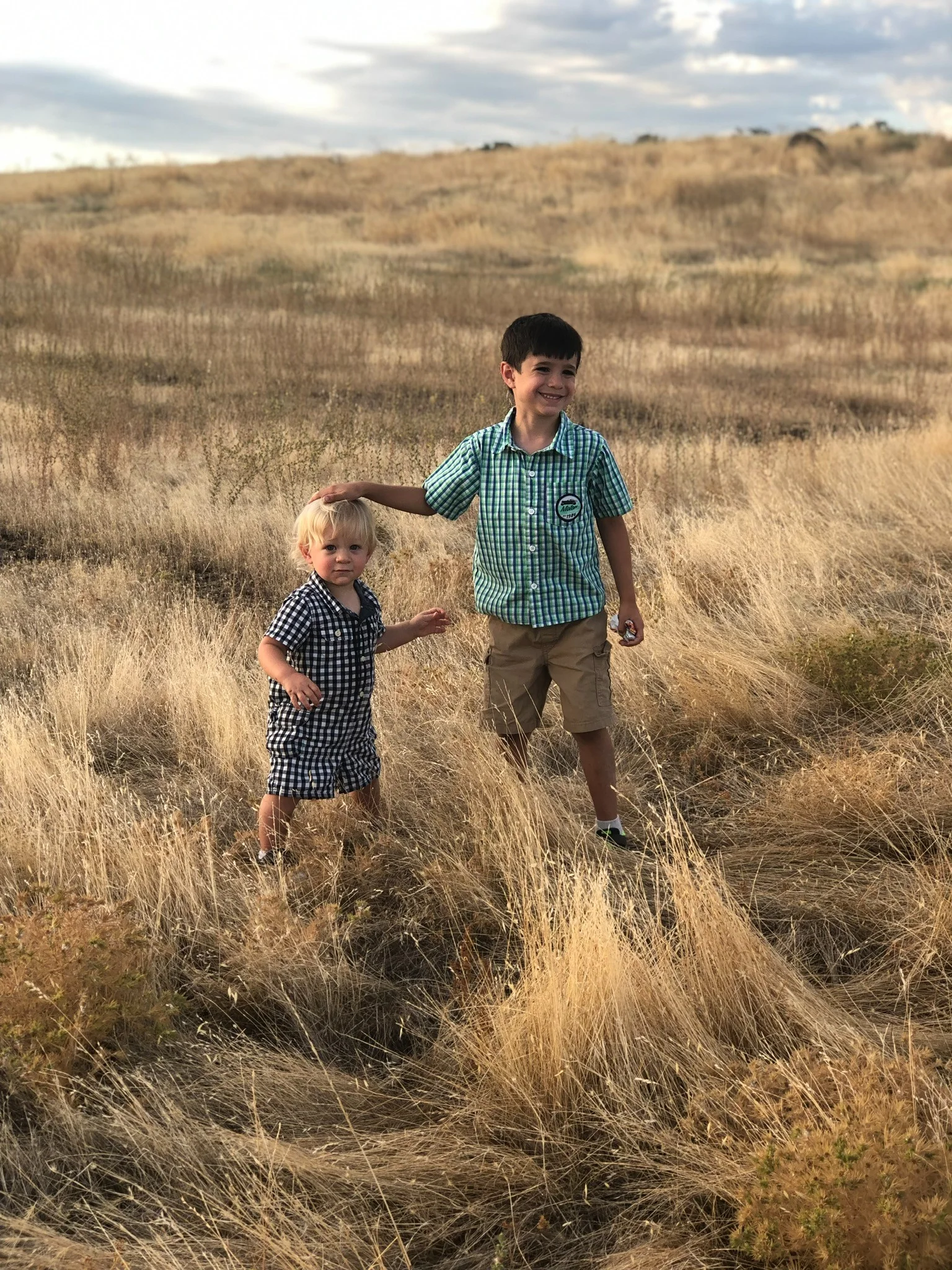
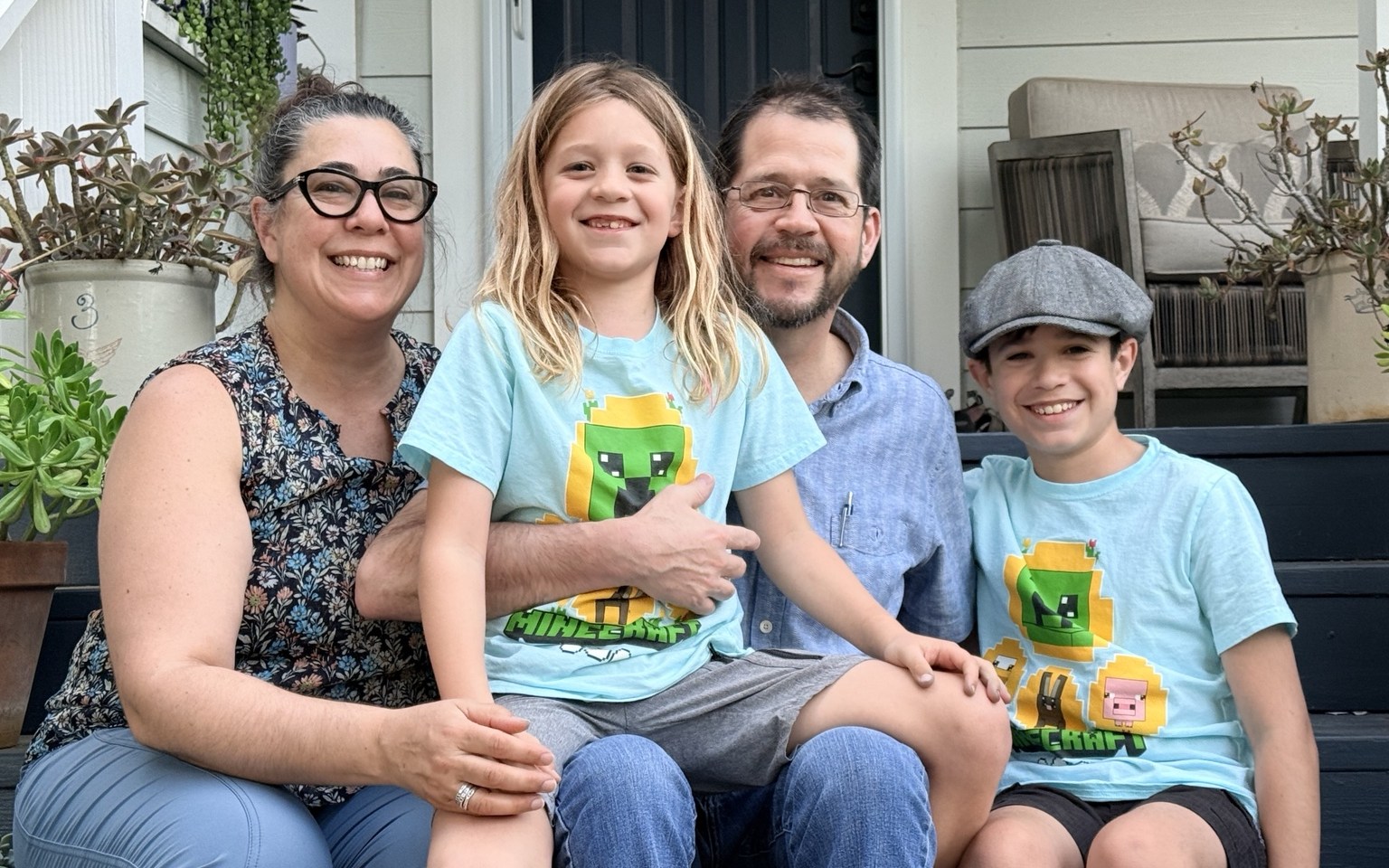
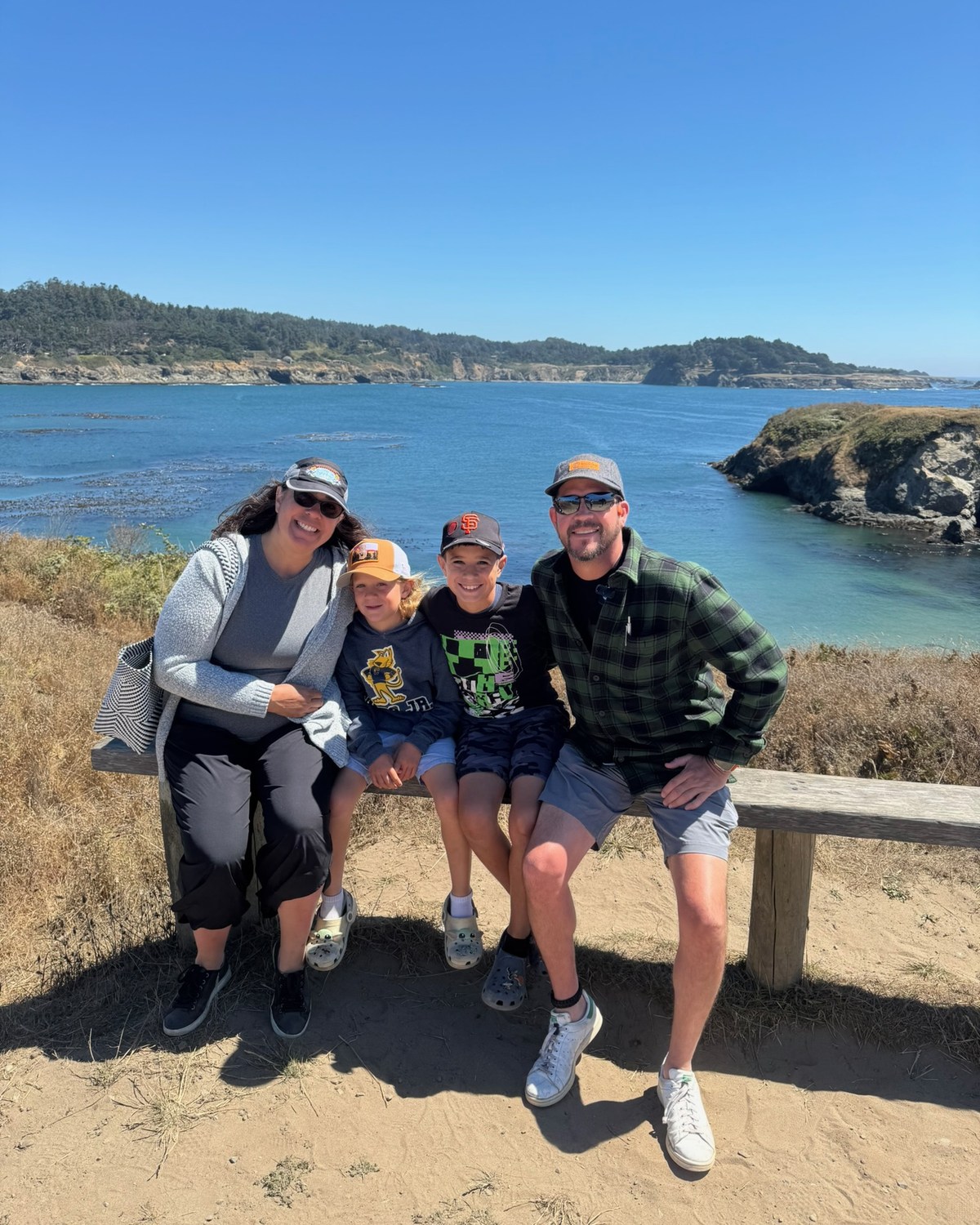
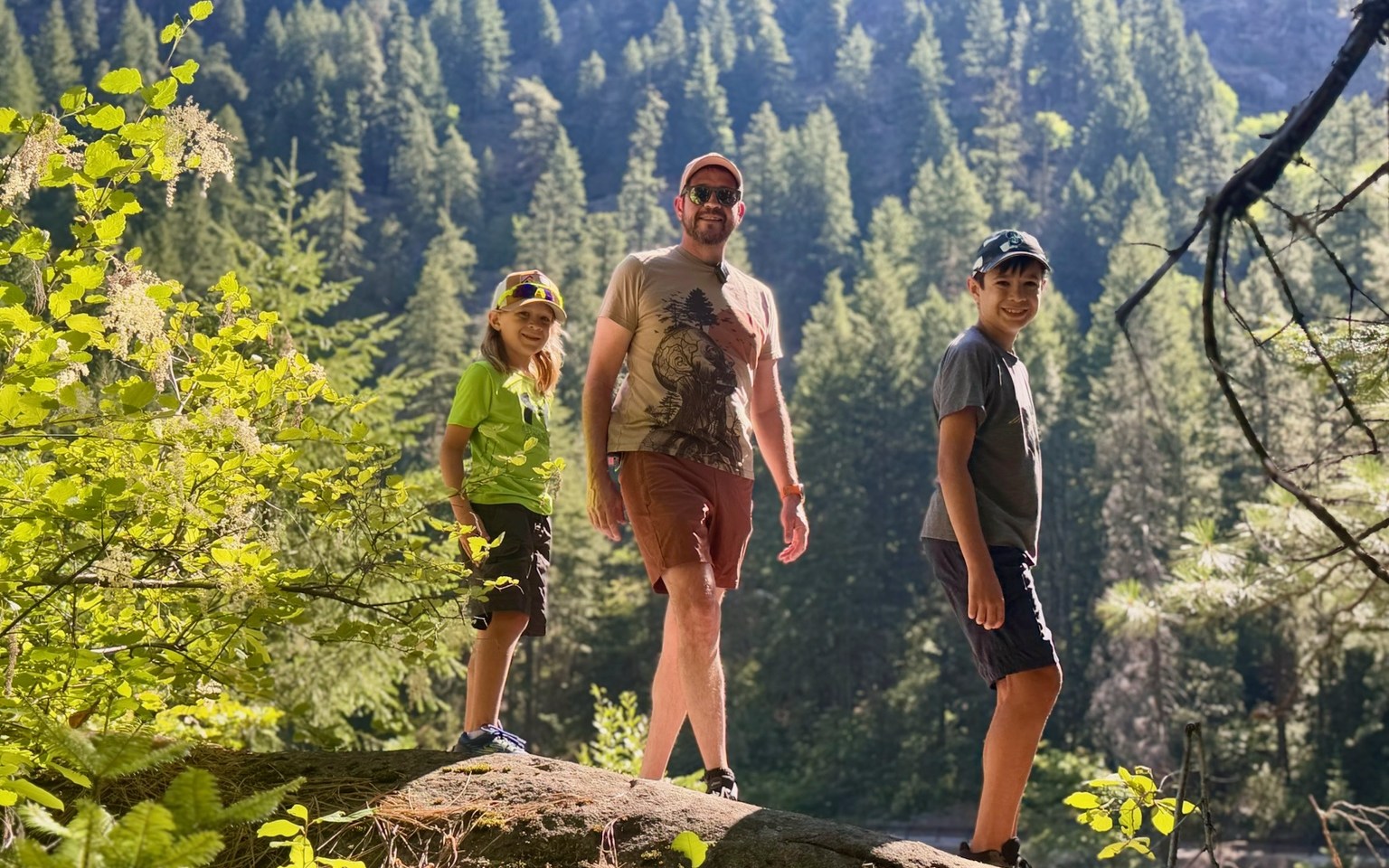
The present-day record is the accumulation of ordinary places, shared trips, outdoor movement, and family gatherings. The pictures can carry some of that work without each one being sentenced to a paragraph beneath it.
Family lines
Mexican-American maternal heritage, carried through a very specific family history.
Randall’s maternal family comes from El Chante, Jalisco, not far from Autlán, the hometown of Carlos Santana. His maternal grandfather was a Cristero who fled Mexico after the family’s involvement was exposed, reaching the first Catholic church on the U.S. side in Nogales, Arizona. Randall’s parents were married in that same church in 1968, and Randall later served as an altar boy at both of his maternal grandparents’ funerals there. The parish name remains to be attached before it is stated as a sourced institutional fact.
That history was not something discovered for a campaign biography. Randall’s public biography described him as second-generation Mexican-American on his mother’s side by 2007, and he later spoke about the Cristero/Nogales family history at Chico’s Families Belong Together rally on June 30, 2018. On the paternal side, family genealogy traces the Stone line to Deacon Gregory Stone of Cambridge, Massachusetts; the early genealogy is published, while the complete modern generation-by-generation bridge remains part of the source work.
Generations & boundaries
Estrangement is not inheritance.
I have been public about having no relationship with my parents and ended direct contact decades ago after a long history that included emotional and physical abuse and the later rupture from the family home. With age, I have become less willing to excuse the causes of those scars.
That decision applies to me. Krista and I have encouraged and invested in Rhys and Karden having their own relationship with their grandparents. The children are not required to carry an estrangement simply because I chose one for myself.
Family archive · newly identified
The photographs fill in the years between the milestones.
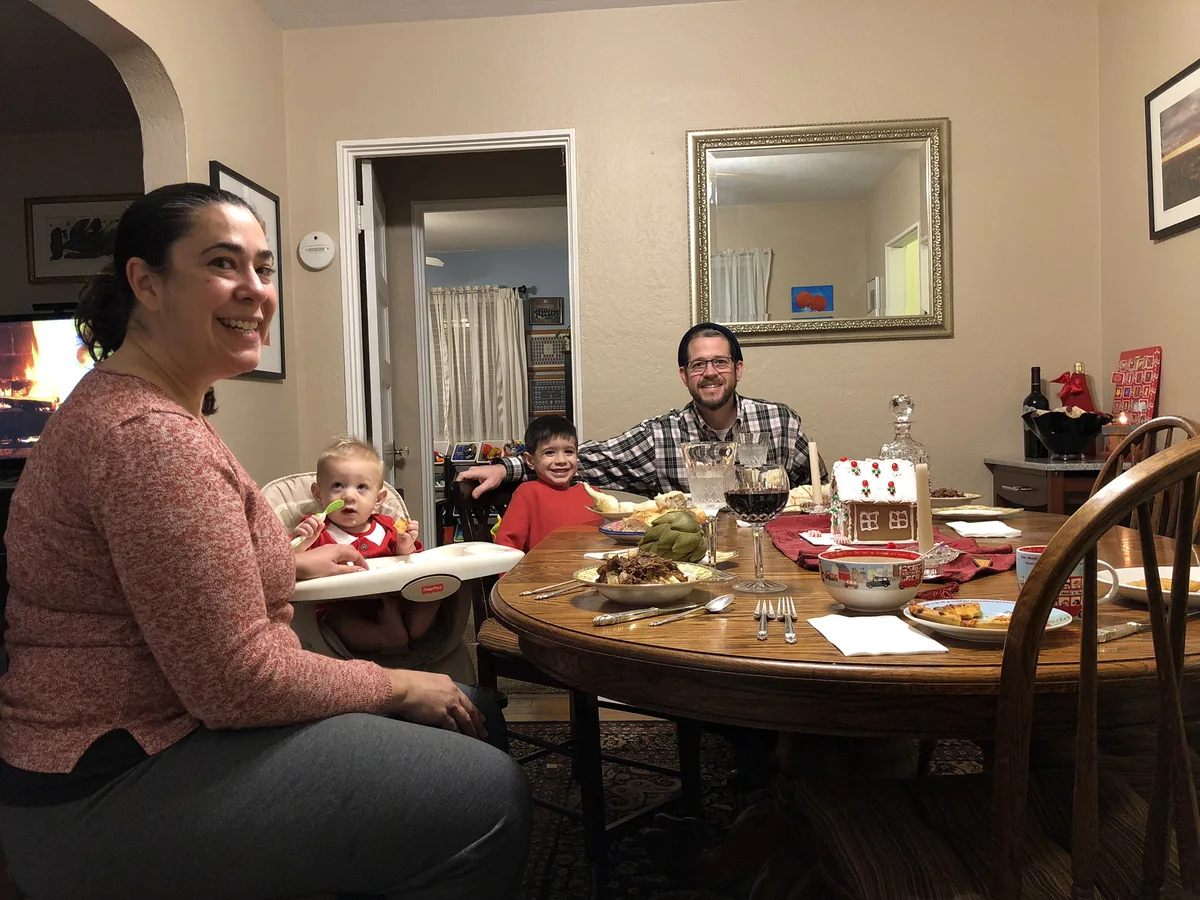
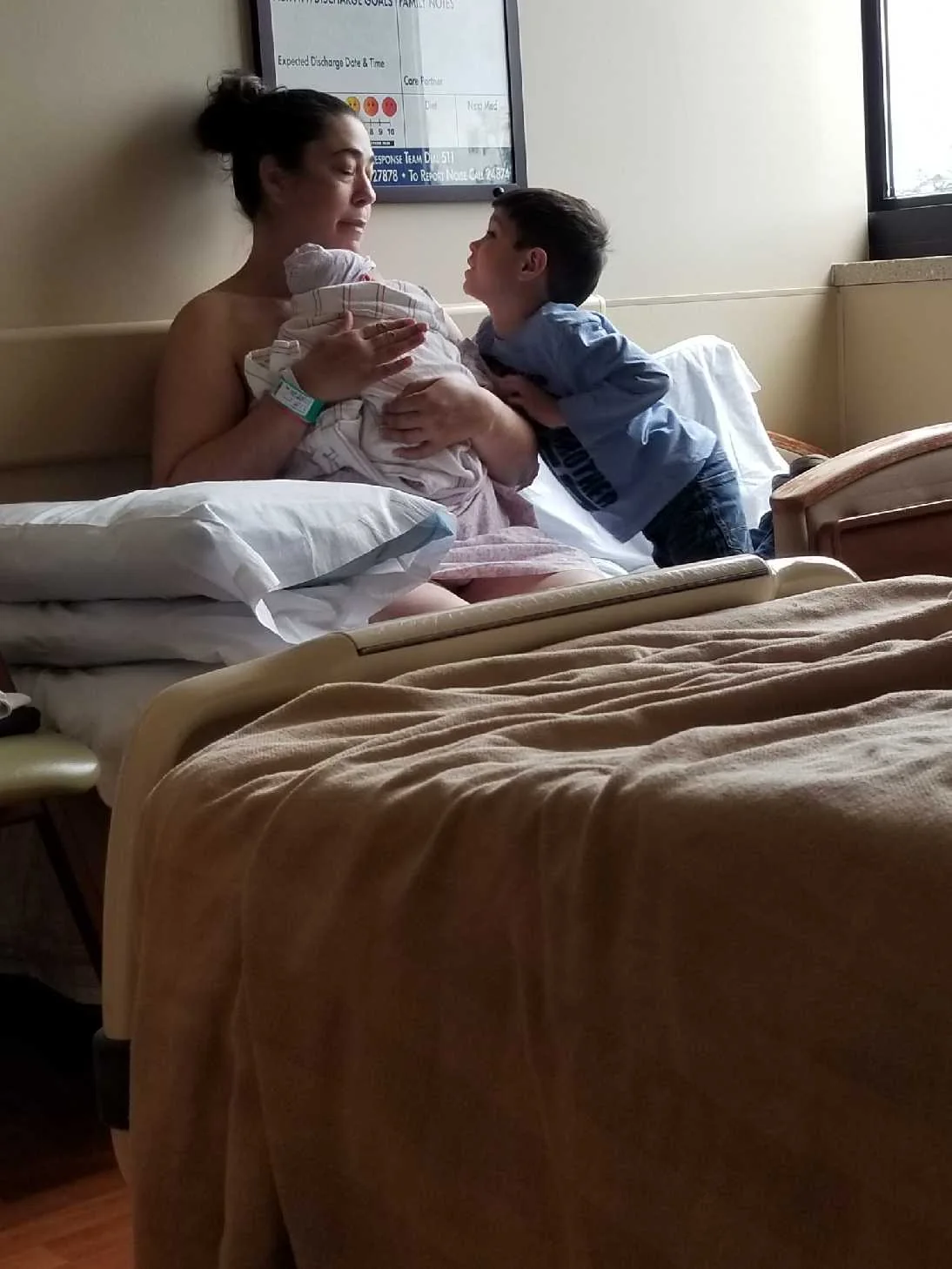
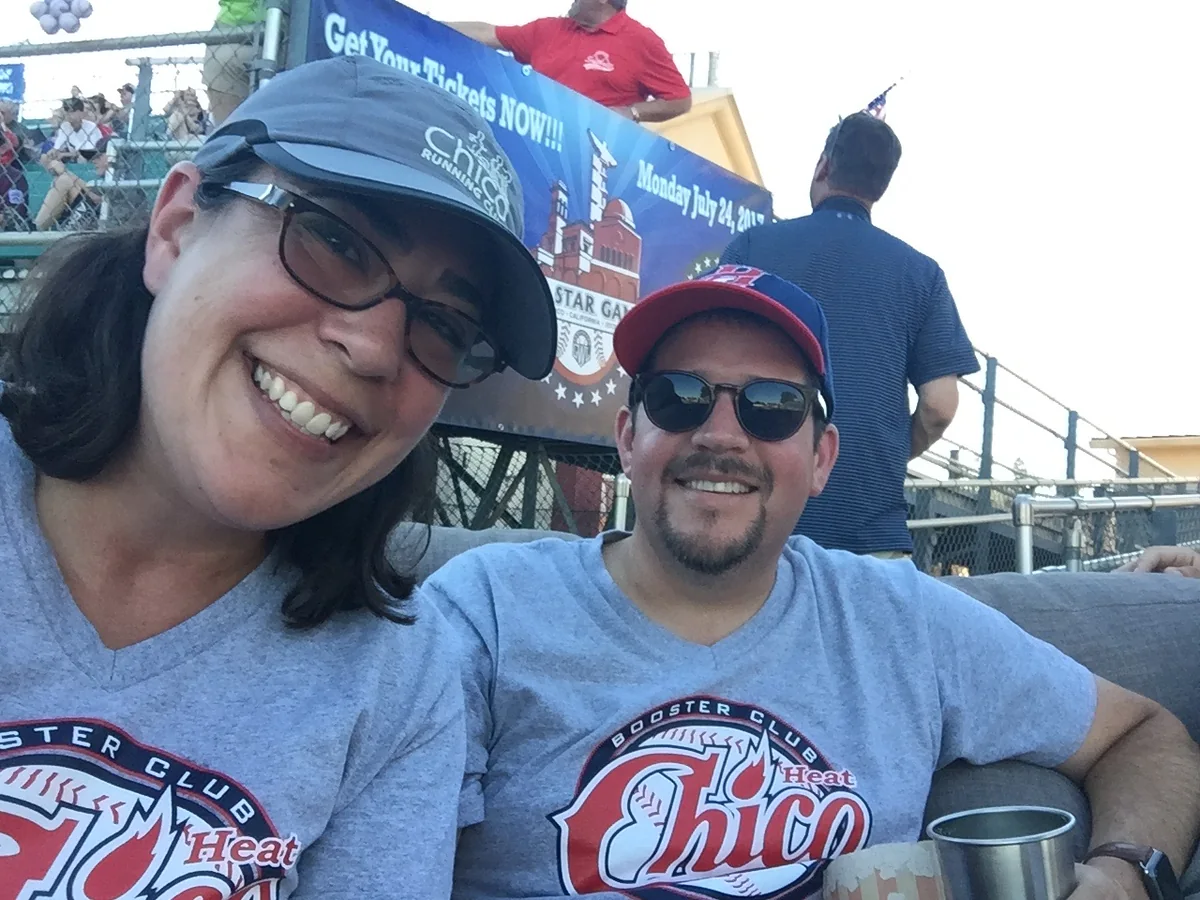
Fort Bragg, baseball, a hospital room, Christmas dinner and the ordinary errands that children turn into family history.