Backcountry · road · events · rapid deployment
Field Operations
Field systems should be understandable when the weather is bad, the network is weak and nobody wants to rediscover a configuration from memory. Power, antennas, batteries, direct RF and fallback layers are treated as one system.
Field gear should still make sense when it is dark, cold and nobody wants a lecture.
Terrain reference
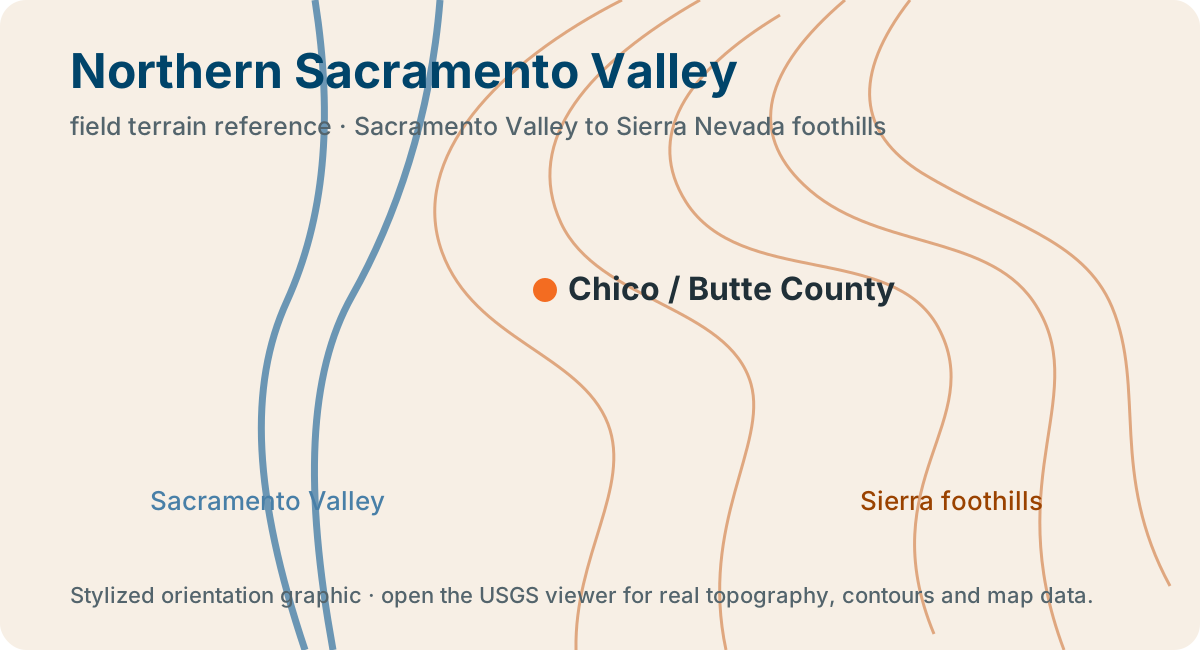
Northern Sacramento Valley topography
For VHF/UHF path work, repeaters, field sites, road travel and backcountry planning, terrain is often more useful than another paragraph about radio specifications.
Recreation provides the test environment.
Snow camping in Lassen, backcountry skiing in the Sierra and Cascades, whitewater kayaking, EUC travel, running, and road travel test power, charging, antennas, weather protection, navigation, and operator habits.
Organized by task
- Direct voice and local repeaters
- APRS position and messaging
- GMRS family coordination
- Winlink and store-and-forward messaging
- Hotspot and linked-network access when internet exists
- Portable power, charging, lighting, and weather protection
- Paper references and offline configuration records
Longer continuity
Lightweight antennas and portable power support extended off-grid operation. A Honda 2000-class generator can recharge radios, batteries, mobile devices, lighting, and EUC systems when a larger family continuity plan is active.
Volunteer support
Field radio also supports events, clubs, training, emergency communications, and community activity where normal infrastructure is stressed or overloaded.
Build and practice a field station
Read the complete beginner guide to voice and digital field stations: handheld kits, antennas, battery planning, portable mobile radios, computer interfaces, written messages, and a practical rehearsal.