Education
Instruction in dance, music, performance, cultural context, discipline, and teamwork.
Raíces · aprendizaje · comunidad
Rosas de María exists to teach, preserve, enrich, share, promote and celebrate Mexican culture through dance and music. Children and families are the point. The nonprofit structure, fundraising, schedules, costumes, and paperwork exist to keep good instruction available and the troupe moving.
Arts education is also cultural history in motion. Regional dance traditions, music, costume, language, choreography, and public performance give young dancers a way to learn history by practicing it together.
Ballet Folklórico Rosas de María exists to teach, preserve, enrich, share, promote, and celebrate Mexican culture through the performing arts of dance and music. It does that by placing living tradition in the hands—and feet—of the next generation.
Rosas de María will never turn away a dancer with the courage to dream. Today, 1 in 5 dancers receives a full scholarship because tradition should never be limited by circumstance.
Rosas de María was incorporated in California on April 21, 2025 for public and charitable purposes and is recognized as a 501(c)(3) charitable nonprofit. It is not organized for private gain, and its property and income are dedicated to charitable purposes.
Technique and choreography are part of the work. So are discipline, confidence, cultural knowledge, teamwork, responsibility, stage presence, and respect for the traditions represented.
Folklórico is sustained by more than the people visible on stage. Families, volunteers, instructors, musicians, costume work, transportation, rehearsals, venues, sponsors, and community invitations all keep the door open.
Rosas de María creates a place where language, music, history, movement, and community reinforce one another. Cultural knowledge is practiced together, carried onto the stage, and shared with the next generation.

Instruction in dance, music, performance, cultural context, discipline, and teamwork.
Tradition is carried through rehearsal, correction, costume, music, language, and public performance.
Board governance, officer responsibility, financial controls, volunteers, families, and public accountability support the artistic work.
Scholarships reduce financial barriers so a child’s circumstances do not decide whether that child may dance.
Culture in public
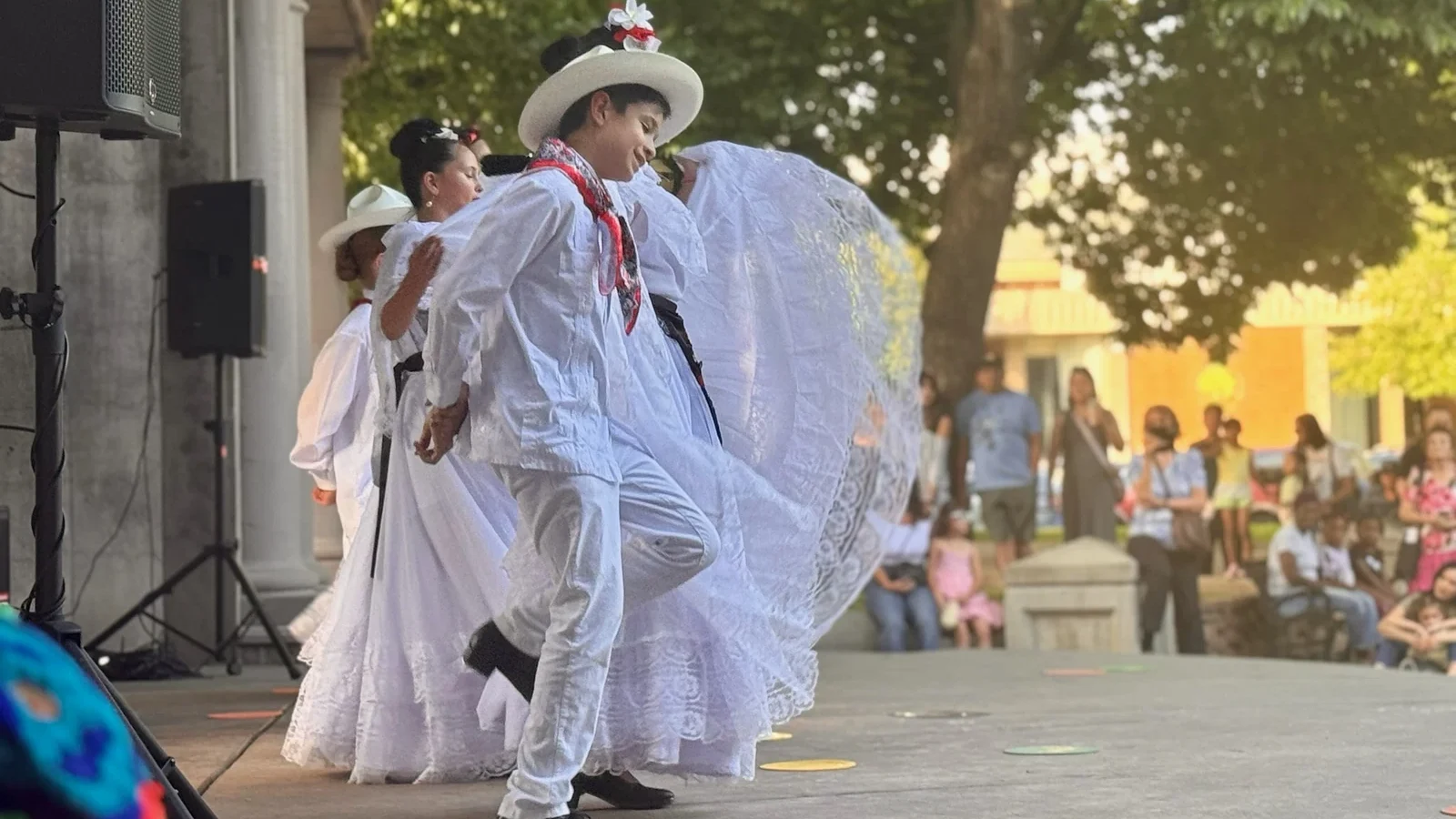
Rosas de María treats performance as the public expression of a deeper cultural institution: rehearsal, language, instruction, family participation, nonprofit administration and shared responsibility.
Maestras · teaching history
Latoyia Gonzalez, Maria Trenda, and Joyce Becker are part of Rosas de María’s maestra and teaching history. The photograph below records the three together at the May 2025 Board meeting holding the organization’s IRS 501(c)(3) determination letter. Their work belongs in the organization’s record because instruction, rehearsal and continuity are the heart of the troupe, not background labor. Latoyia Gonzalez and Joyce Becker are co-founding maestras of Rosas de María.
